County · Transylvania
Alba County
Seat: Alba Iulia
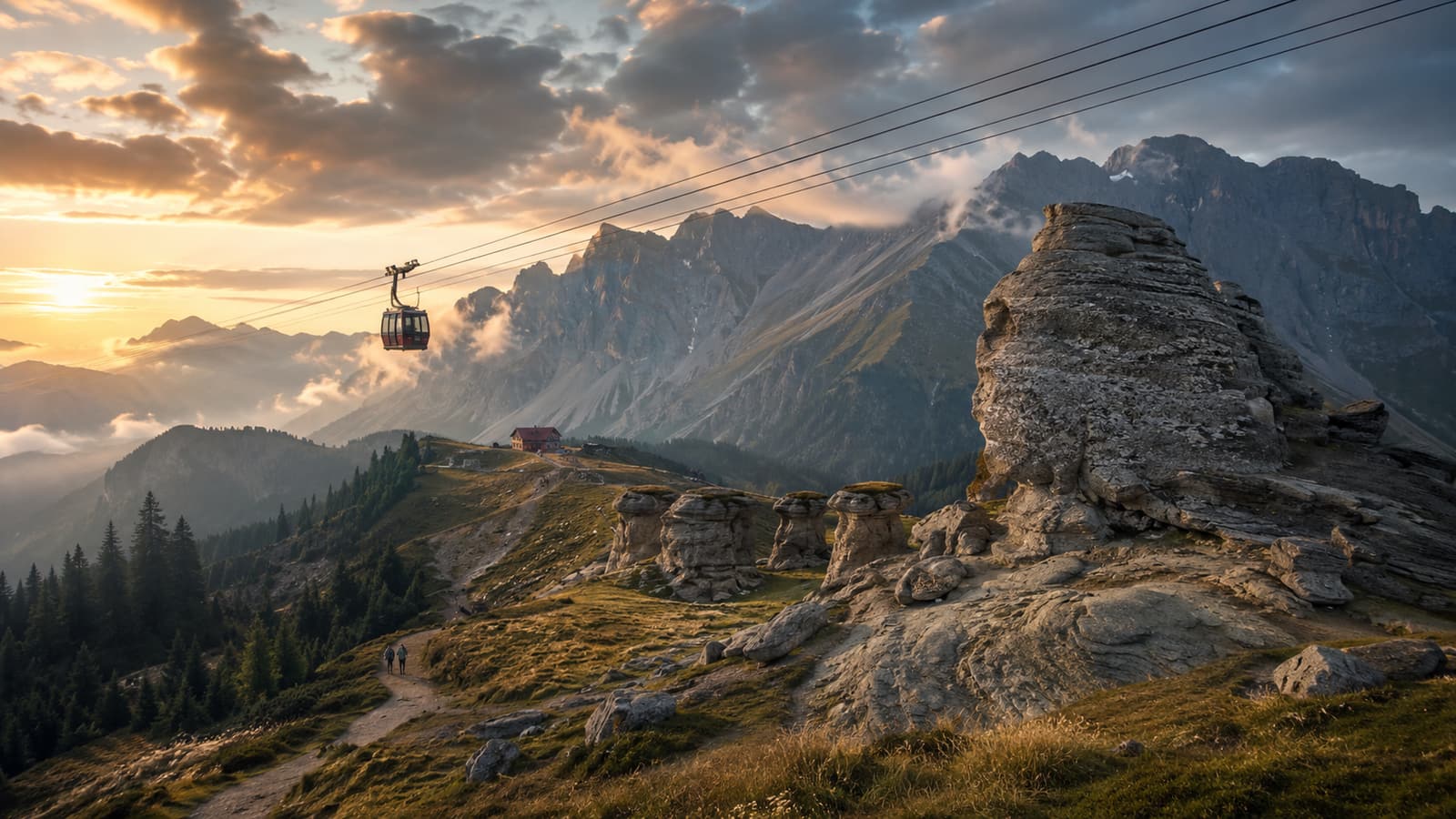
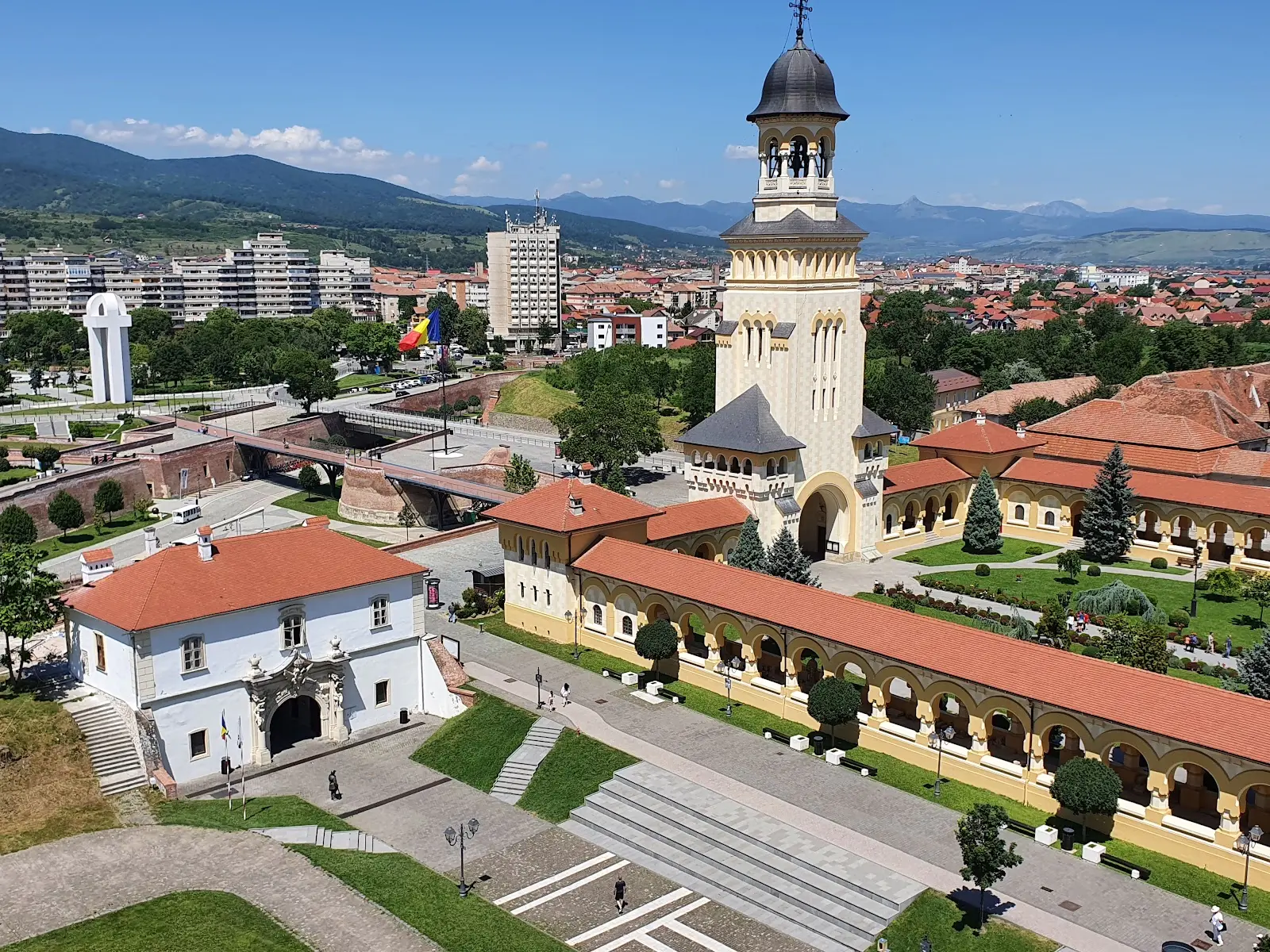
In the heart of Transylvania, Alba county stretches from the peaks of the Apuseni Mountains to vine-clad hills. This is the land of Romania's grand history: at Alba Iulia, the county seat, the imposing star-shaped Alba Carolina citadel marks the site of the 1918 Great Union.
Around it unfold natural wonders, the white-walled village of Rimetea beneath Piatra Secuiului, and the Roman gold galleries of Roșia Montană, now a UNESCO site. A realm of gold, wine and legend, where every stone tells a story.
Cities & places in Alba
Not to miss in Alba
 Nature
Cheile Râmețului
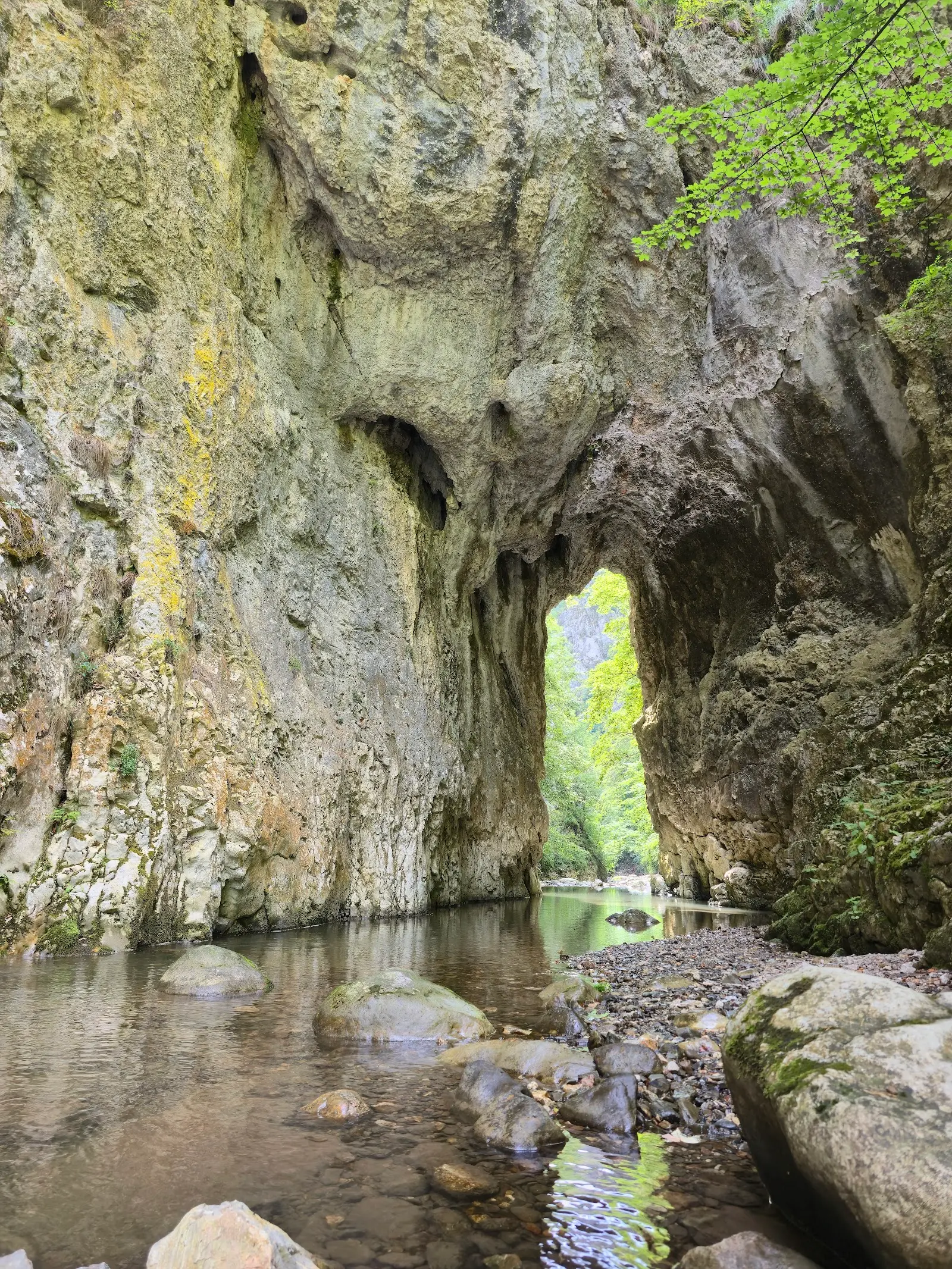
The Râmeț Gorges, carved by the Geoagiu river through the limestone massif of the Trascău Mountains, in Alba County, are among the most spectacular and wildest gorges in the Apuseni. Over roughly a kilometre and a half, the water has cut vertical rock walls rising tens of metres, drawing so close that at the narrowest point the sky is a mere ribbon overhead. The tourist route runs through the water, over boulders and along cables and metal ladders fixed into the rock, offering a proper adventure for suitably equipped walkers. The gorges shelter a rare flora, endemic species and a cave fauna, and form a protected area. Nearby stands Râmeț Monastery, one of the oldest monastic settlements in Transylvania. Practical note: walk the gorges only in settled weather and in footwear that can get wet, since the water rises dangerously after rain, making the route impassable.
 Mountain
Piatra Secuiului
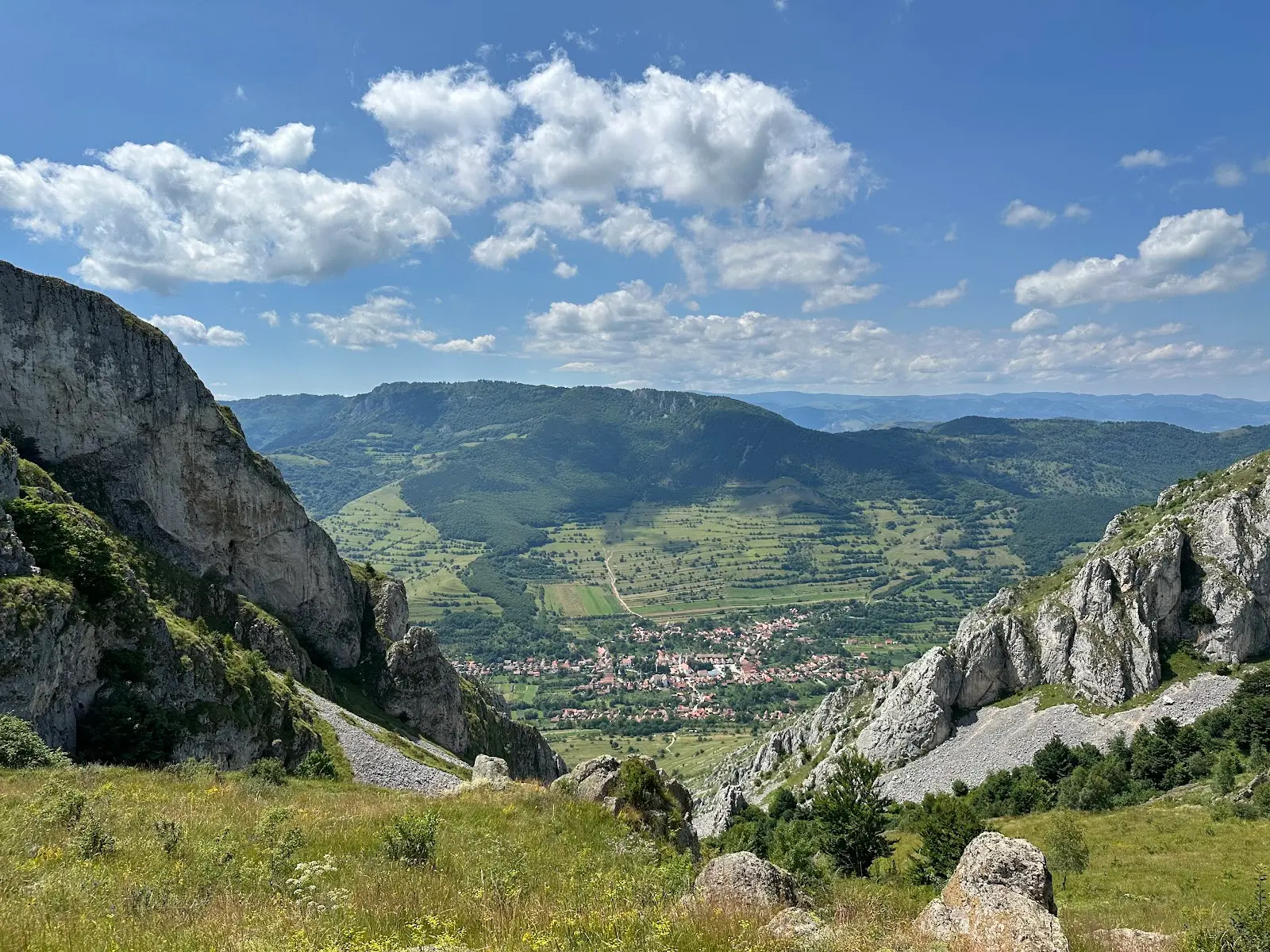
Piatra Secuiului, known in Hungarian as Székelykő, is the steep limestone massif that watches over the village of Rimetea in Alba County, a crest of rock rising proudly more than 1,100 metres above the little houses with white facades and green shutters. The mountain, part of the Trascău range, is famous for a rare phenomenon: because of its position, at Rimetea the sun seems to rise twice, hiding behind the ridge and reappearing. The waymarked ascent, accessible to walkers of average fitness, winds through forest and meadows to the rocky summit, from where the panorama opens over the Székely village, the Trascău Depression and the ridges of the Apuseni. Rimetea, a village awarded for preserving its traditional architecture, forms with the mountain a scene of rare harmony. Practical note: wear boots with grippy soles, for the final stretch to the top crosses rock and can be slippery in wet weather.
 Church
Catedrala Sfântul Mihail Alba Iulia
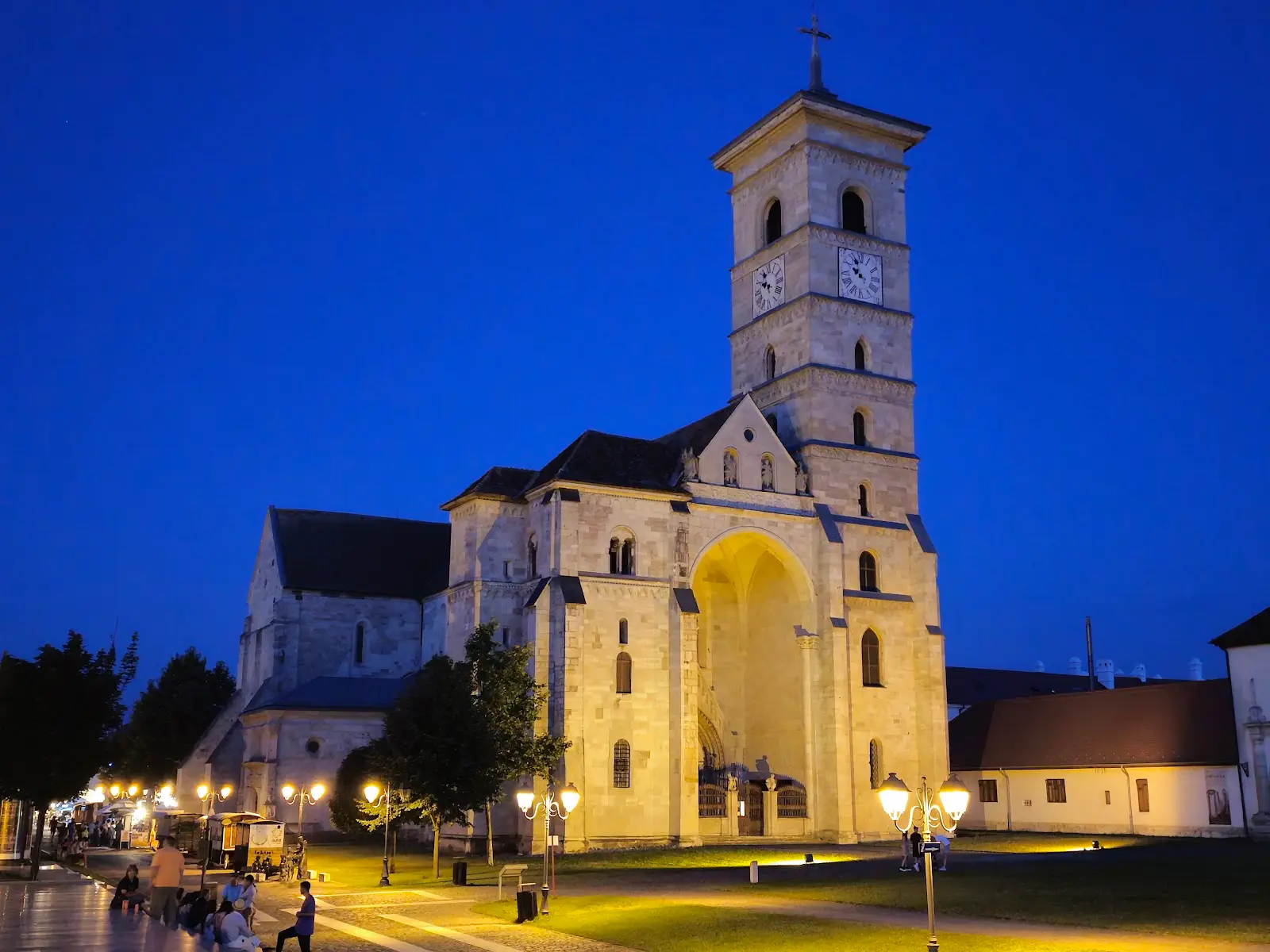
The Roman Catholic Cathedral of Saint Michael in Alba Iulia, in the heart of the Alba Carolina citadel, is the city's oldest and most valuable architectural monument, an edifice built in Romanesque style in the 12th and 13th centuries, on the site of earlier churches. Over the ages, the cathedral has witnessed crucial events in the history of Transylvania and has undergone numerous Gothic, Renaissance and Baroque transformations, which enriched its appearance without diminishing its original grandeur. Inside lie the tombs of notable figures, among them John Hunyadi, the great voivode and defender of Christendom, alongside his son and brother, as well as the tombs of princes of Transylvania. The cathedral, seat of the Roman Catholic bishopric, is a central point of the Baroque Vauban citadel. Practical note: combine the visit with a tour of the Alba Carolina citadel, with the nearby Orthodox Coronation Cathedral and with the changing of the guard ceremony.
 Museum
Muzeul Principia (Castrul Roman Apulum)
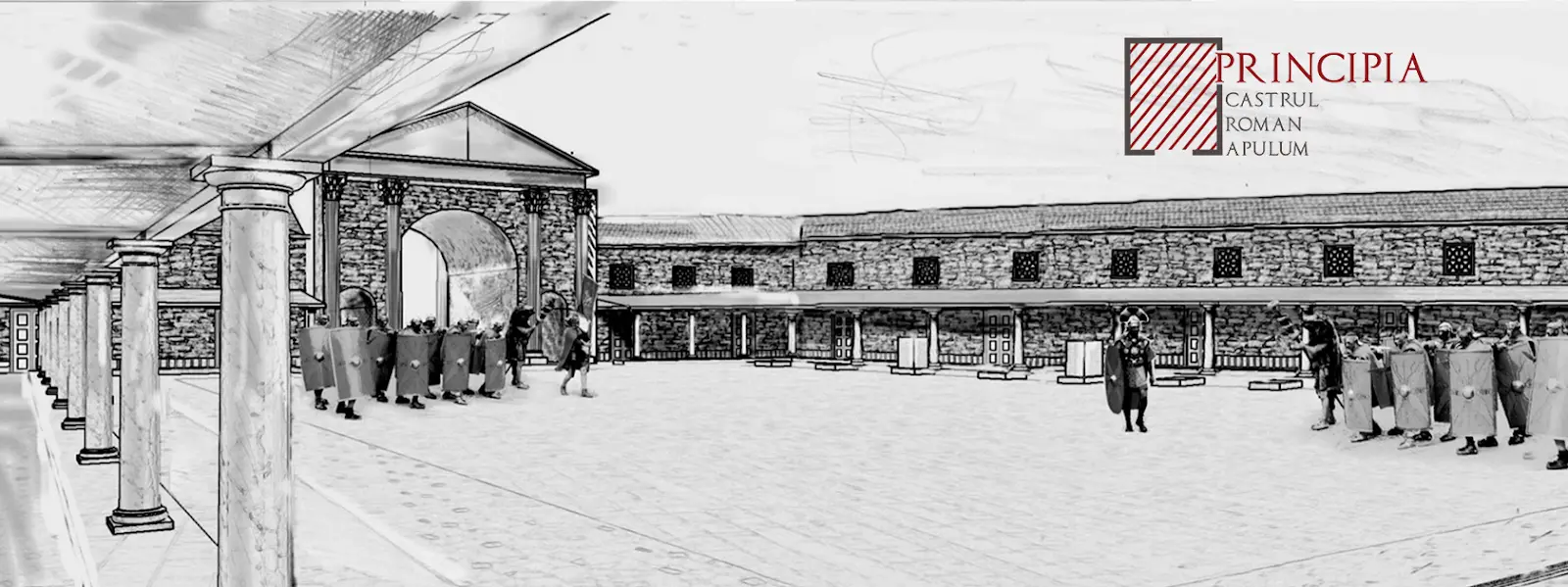
The Principia Museum in Alba Iulia brings back to light the Roman fort of Apulum, one of the most important military centres of Roman Dacia. The Thirteenth Legion Gemina was garrisoned here, and the fort gave rise to a thriving urban settlement that would later become the nucleus of the city. The museum is organised around the principia, the central command building of the fort, where the military altar, the archive and the shrine of the standards were located. Visitors can see the foundations and remains uncovered through archaeological research, together with reconstructions and explanatory materials that convey the daily life of the soldiers and the organisation of the imperial army. Set within the imposing Alba Carolina citadel, the museum completes a rich historical route that begins in the Roman era and reaches the 18th-century Vauban-style fortress. Practical note: the visit combines easily with a tour of the citadel and the other landmarks of Alba Iulia, and the underground spaces can be cool.
 Landmark
Poarta a III-a a Cetății
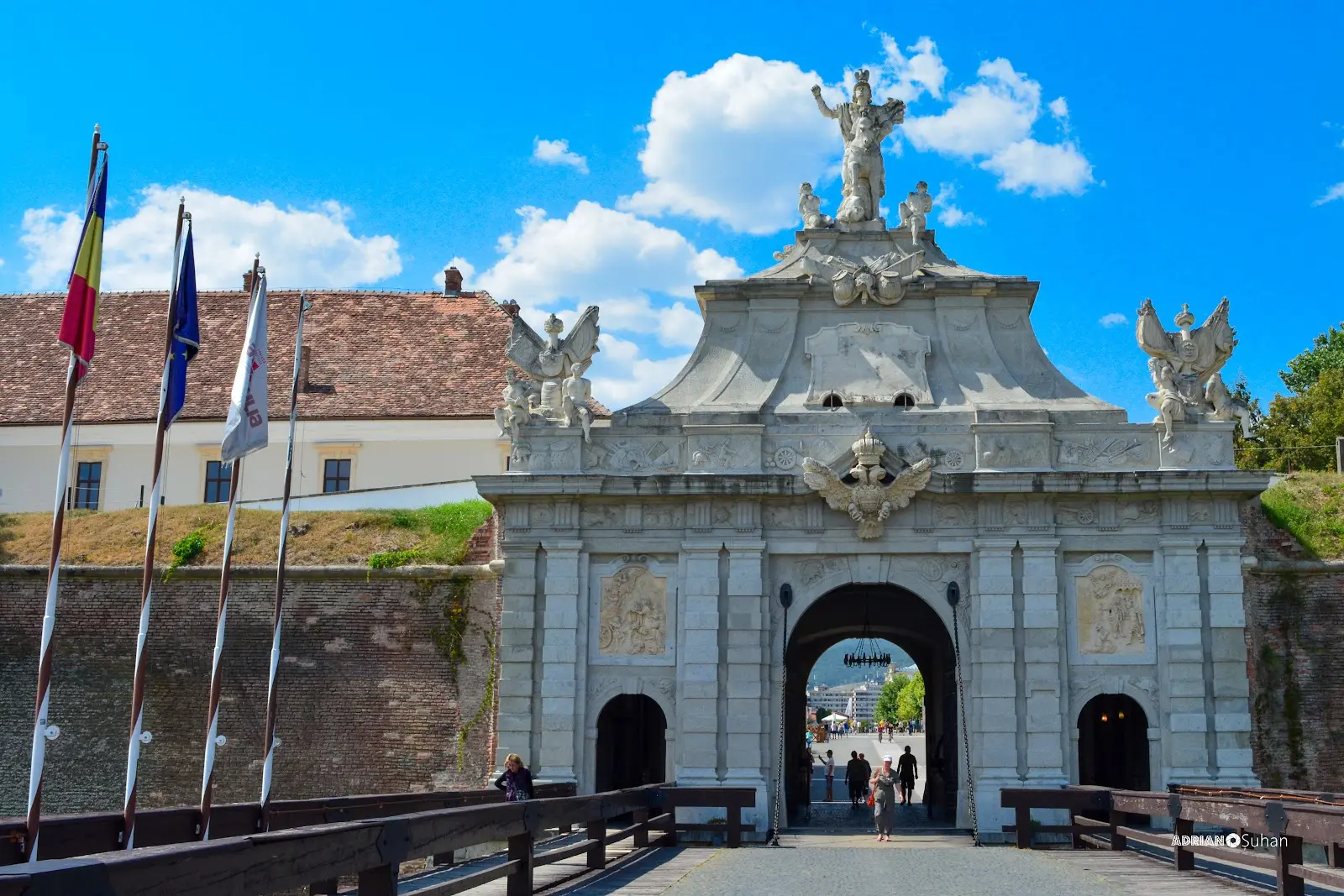
The Third Gate of the Alba Carolina Citadel in Alba Iulia is one of the most spectacular entrances of this impressive Vauban-style fortification, raised in the eighteenth century under Habsburg rule. The monumental gate, richly decorated with sculptures, statues and allegorical reliefs, served as the main and triumphal entrance into the citadel. Above the arch stand out an equestrian statue and numerous Baroque ornamental elements that exalt imperial power. The gate is part of the system of gates that marks the visiting route of the citadel, an ensemble regarded as among the best-preserved bastioned fortifications in south-eastern Europe. Through its monumentality and decorative richness, the gate is a symbol of the Alba Carolina Citadel. It is best admired on foot, as part of a walk through the fortified ensemble, a first-rank tourist attraction of the city.
 Church
Catedrala Reîntregirii
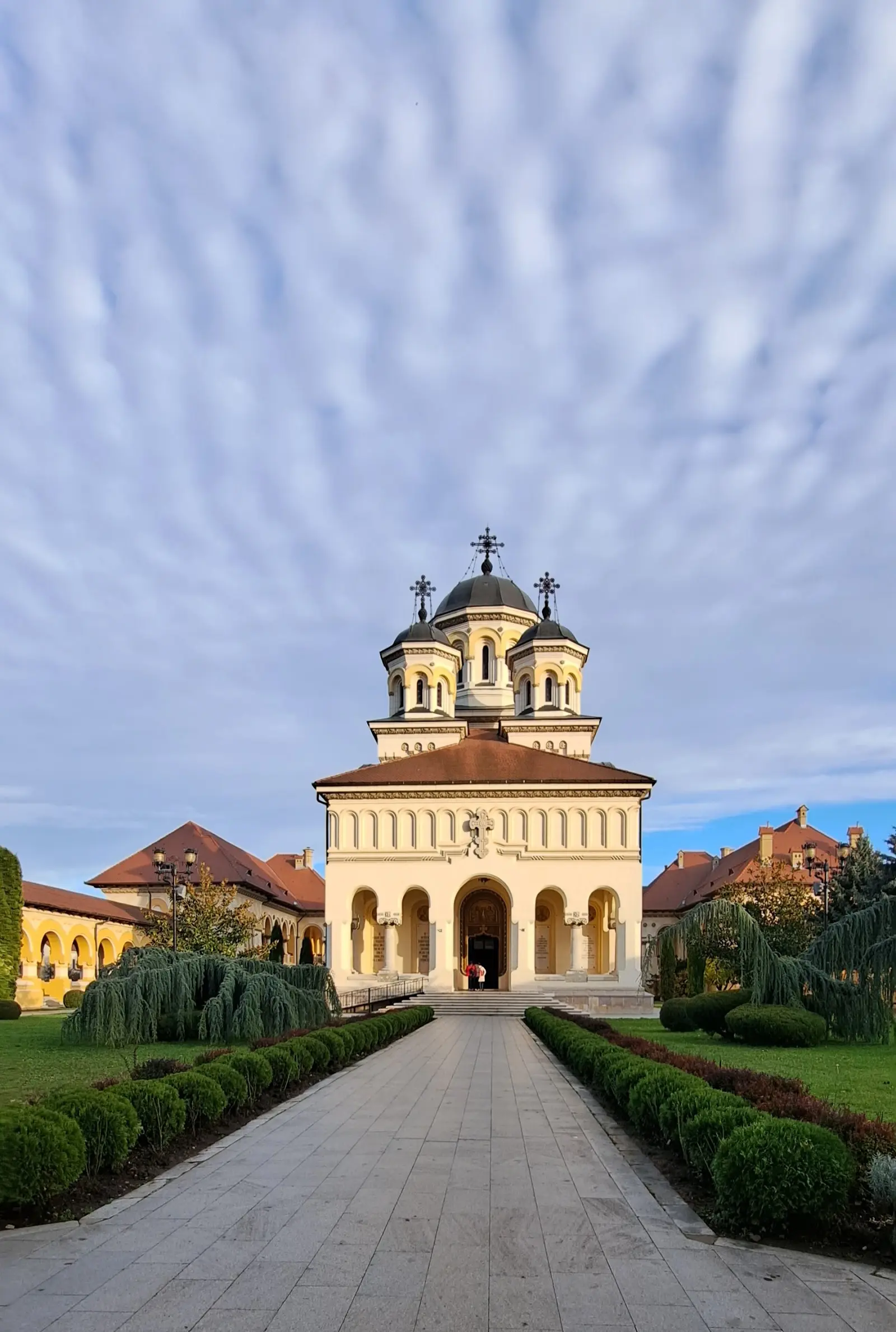
The Reunification Cathedral in Alba Iulia, also known as the Coronation Cathedral, is a monument of deep national significance, built in the early 1920s within the Alba Carolina fortress to mark the Great Union of 1918 and the coronation of King Ferdinand and Queen Marie as sovereigns of a reunited Romania, a ceremony that took place here in 1922. The cathedral, built in the Neo-Romanian style inspired by traditional church architecture, has an ample plan, an imposing bell tower at the entrance and an inner courtyard recalling the Brancovan monasteries. The interior is decorated with paintings that evoke important moments of national history, and in the narthex are preserved the portraits of the crowned sovereigns. The place is closely tied to the symbolism of Romanian unity. Practical note: the visit combines naturally with exploring the Alba Carolina fortress and the nearby Roman Catholic Cathedral, in a tour of the city's history.
LandmarkTraseul celor Trei Fortificații
In Alba Iulia, the Three Fortifications Trail is a themed walk that reveals, layer upon layer, the city's more than two thousand years of history. The route follows the traces of three superimposed defence systems: the Roman camp of Legion XIII Gemina, the medieval fortification and the imposing Alba Carolina bastion fortress, built in Vauban style in the early 18th century. Markers and information panels guide you past monumental gates, walls, star-shaped bastions and historic buildings, offering a living lesson in military architecture. The Alba Carolina citadel, the largest of its kind in Romania, today hosts museums, cathedrals and a changing of the guard in period costume. It is the best way to understand the city; the trail is outdoors and accessible, while the schedule of indoor sites varies.
 Monastery
Mănăstirea Râmeț
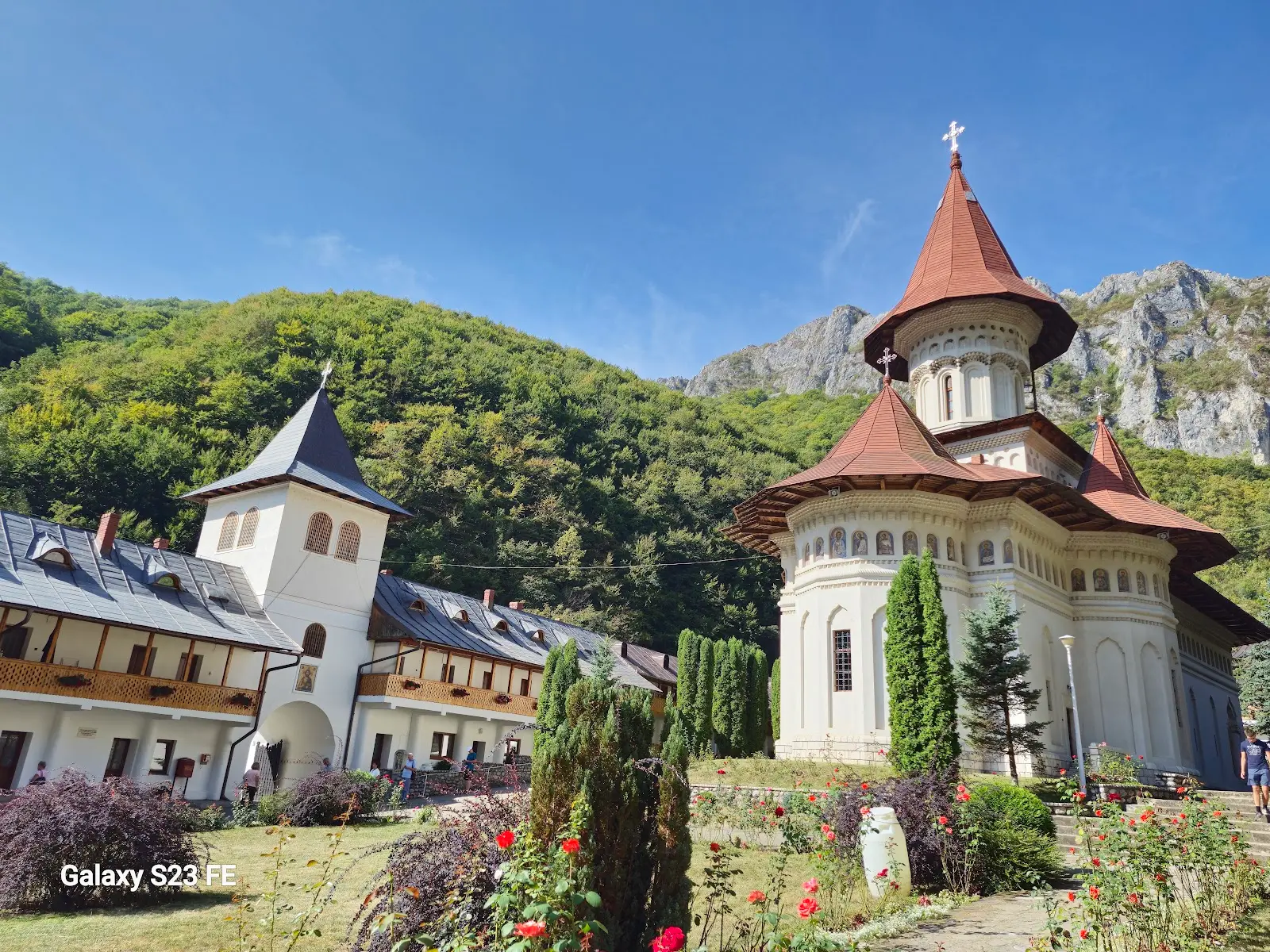
Ramet Monastery is one of the oldest monastic settlements in Transylvania, set in a spectacular natural setting in the Trascau Mountains, in Alba county, near the town of Alba Iulia. Placed at the entrance to the famous Ramet Gorges, the monastery is surrounded by high cliffs, forest and clear waters, which give it an atmosphere of deep quiet. The old church preserves fragments of mural painting of great value, and some of the earliest inscriptions in the Romanian language were discovered here, a testimony to the age and importance of the place. Over the centuries the monastery went through many trials, being rebuilt several times. Today it is home to a community of nuns and remains an important place of pilgrimage and contemplation. The mountain setting and the nearby gorges make Ramet a sought-after destination both for the faithful and for lovers of nature exploring the Trascau Mountains.
 Church
Catedrala Sfânta Treime Blaj
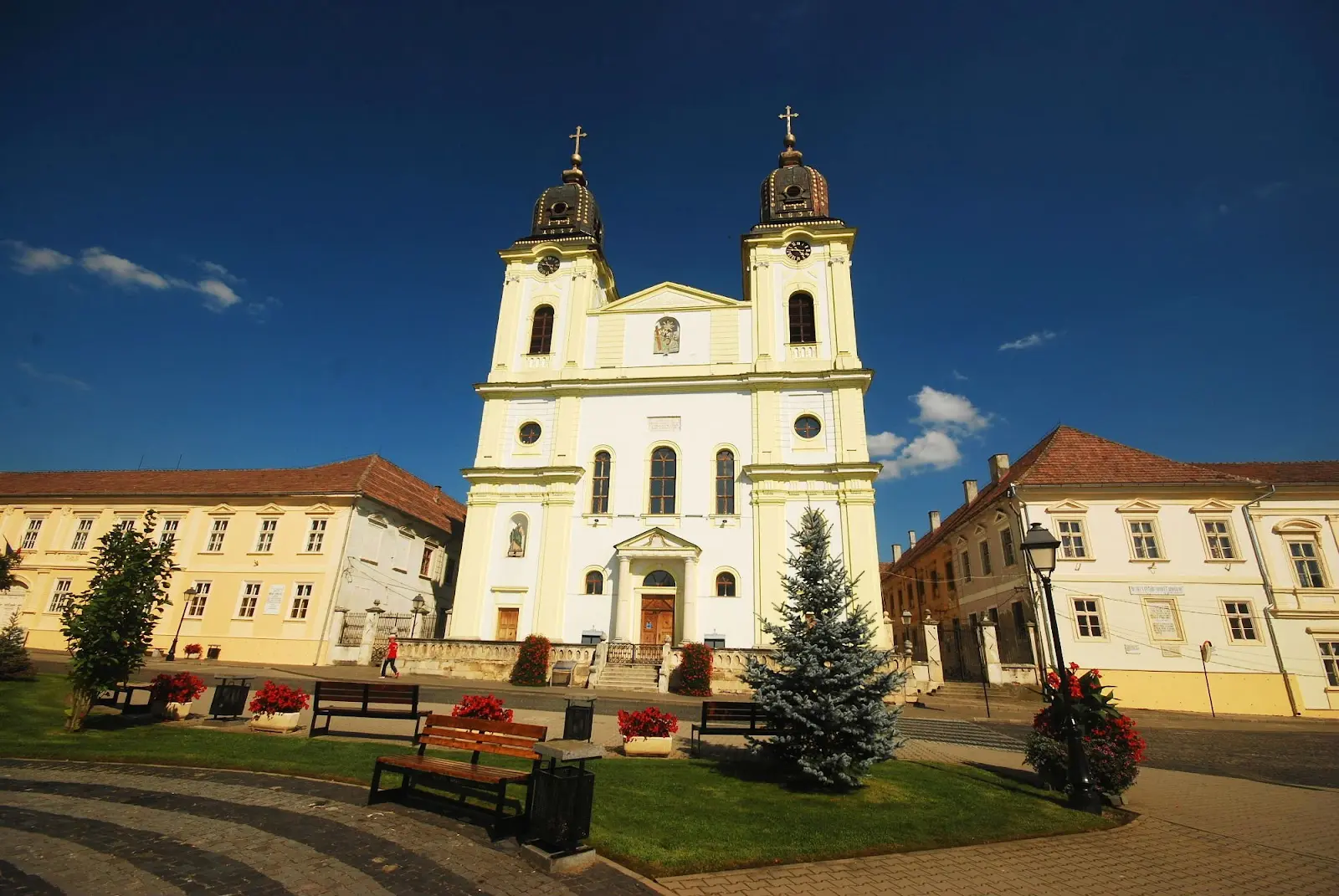
The Holy Trinity Cathedral in Blaj is one of the most important Greek-Catholic churches in Romania and the main place of worship of the town of Blaj, regarded as an essential centre of the culture and identity of the Romanians of Transylvania. Built in the 18th century, the cathedral was the archiepiscopal seat of the Romanian Church United with Rome and played a fundamental role in the spiritual and national life of the Transylvanian Romanians. Intense cultural and educational activity took place here, Blaj becoming the cradle of the Transylvanian School, the enlightenment movement that promoted the Latin origin of the Romanian people. The Baroque architecture of the building, with its twin towers and decorated interior, reflects the age in which it was built. The cathedral remains a symbol of the struggle for the rights of the Romanians of Transylvania and a spiritual landmark for the Greek-Catholic community. Set in the centre of Blaj, near other historic buildings linked to the Transylvanian School, it is a site of profound cultural and religious significance.
 Nature
Râpa Roșie
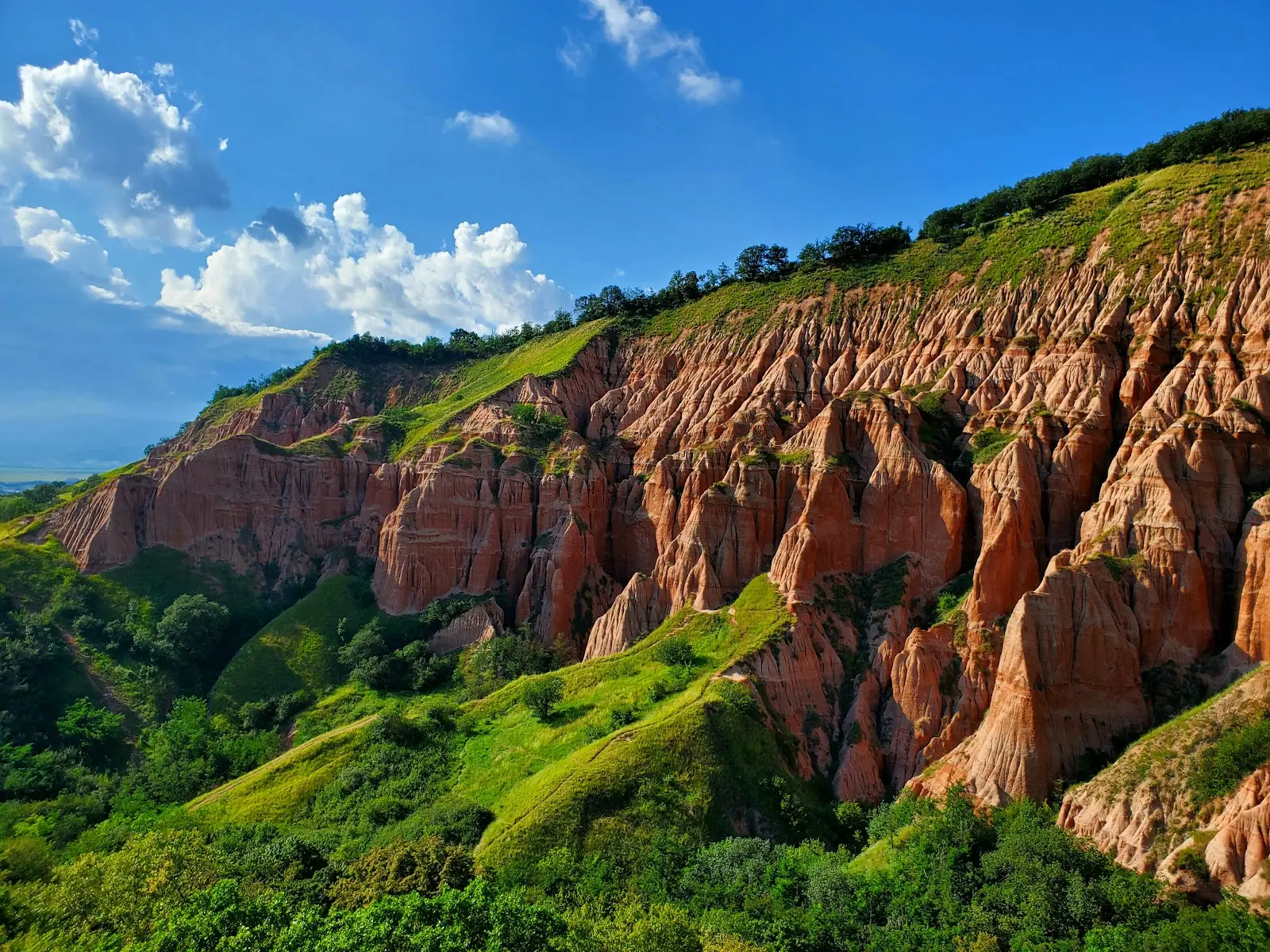
Rapa Rosie is a spectacular geological reserve in Alba County, located not far from Sebes and considered one of the most impressive formations of its kind in Romania. The landscape is dominated by steep walls and columns of reddish and whitish clay and sand, carved over time by rain and wind, which have given rise to fantastic shapes recalling towers, pyramids and jagged ridges. The warm colours of the terrain, ranging from brick-red to ochre and white, create a strong contrast with the surrounding green vegetation and the sky, offering an almost lunar landscape that fascinates photographers. The erosion process is still active, continuously shaping these cliffs tens of metres high. Practical note: the best light for photography is towards sunset, when the colours become intense; proper footwear is recommended, and approaching the unstable edges should be done with caution.
 Nature
Cheile Vălișoarei
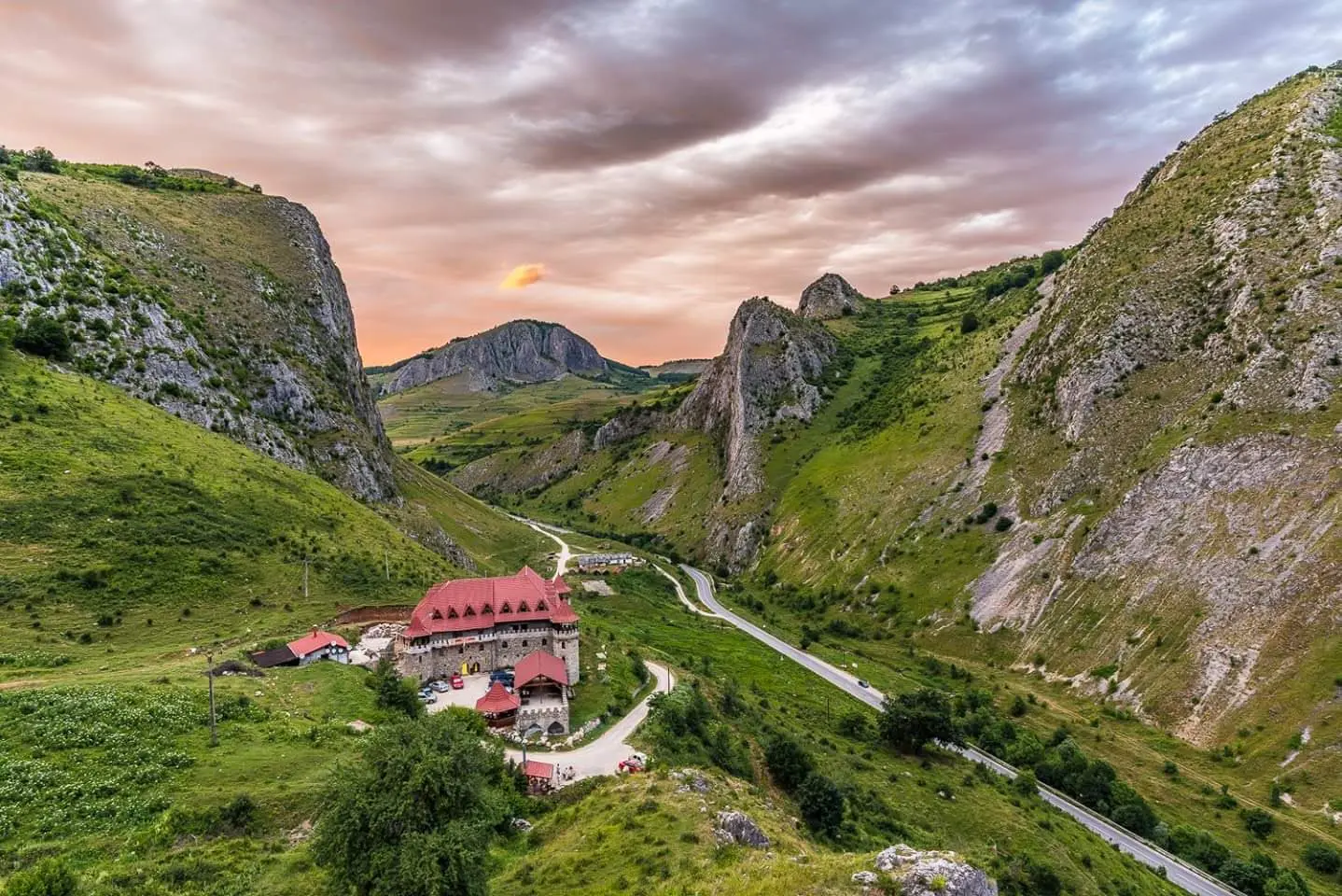
The Valisoara Gorges, also known as the Aiud Gorges, are a spectacular limestone defile located in the Trascau Mountains, near the picturesque village of Rimetea, an area renowned for its landscapes and for its traditional Hungarian architecture of white-washed stone houses. The gorges were formed by the action of water on limestone, giving rise to steep, impressive walls that rise above the road and the stream, offering a dramatic setting. The area is highly valued by climbers for its rock-climbing routes, but also by hikers, who can follow paths among rocks and forest. Nearby rises the characteristic silhouette of the Trascau crags, with Piatra Secuiului peak dominating the village of Rimetea. The landscape blends wild nature with charming traditional villages. Practical note: the visit combines naturally with exploring the village of Rimetea and climbing Piatra Secuiului, a popular route with superb views at sunrise.
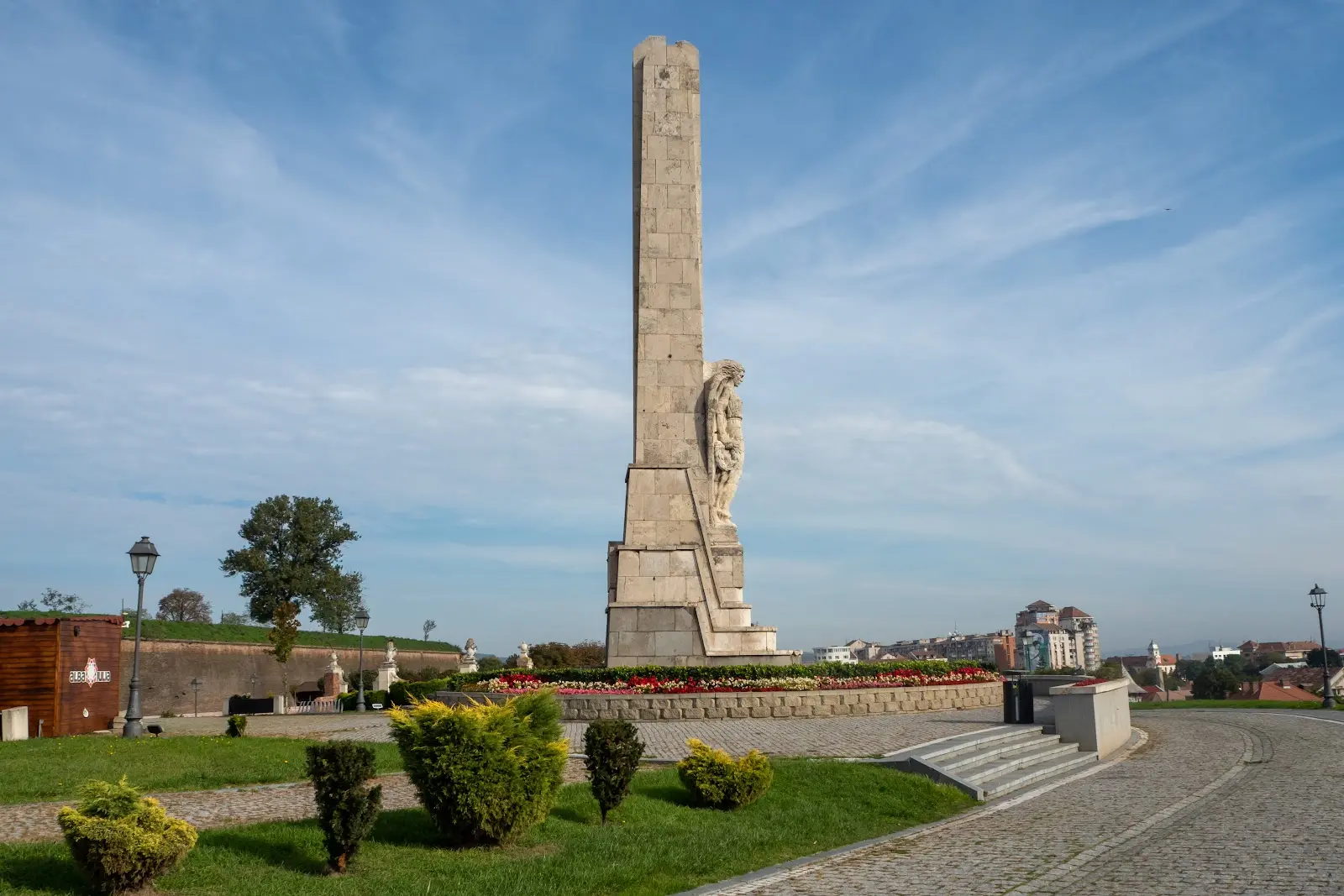 Landmark
Obeliscul Horea, Cloșca și Crișan
The Obelisk of Horea, Closca and Crisan in Alba Iulia is a commemorative monument raised in honour of the three leaders of the great peasant uprising in Transylvania of 1784. Placed in front of the Alba Carolina citadel, the stone obelisk marks the place linked to the tragic end of Horea and Closca, who were executed here, becoming symbols of the Romanian peasants' struggle for social justice. The monument, sober and imposing, honours the memory of the heroes and recalls an important episode of national history. Set in an area rich in monuments, near the gates and walls of the citadel, the obelisk fits into a route through the fortified ensemble. It carries a special symbolic weight for the history of the Romanians of Transylvania. The place can be visited freely, as part of a walk across the citadel plateau, one of the most important attractions of the city.
Plan your trip
Stay, tour and get there
Stays nearby
Stays in Alba
Experiences
Tours & activities
Guided tours, day trips and hand-picked experiences via GetYourGuide — free cancellation on most.
See all experiencesGetting to Romania
Flights, transfer & car
Fly into Romania
Compare fares to Bucharest Otopeni (OTP) and regional airports — Cluj, Sibiu, Iași, Timișoara.
Airport transfer
Private, fixed-price door-to-door transfer — driver waiting from the moment you land.
Rent a car — see the real Romania
A rental car is the key to Romania: the Transfăgărășan, the painted monasteries of Bucovina, mountain roads and the villages of Maramureș that no train reaches.
Find a carKeep exploring