
Wallachia
Sinaia
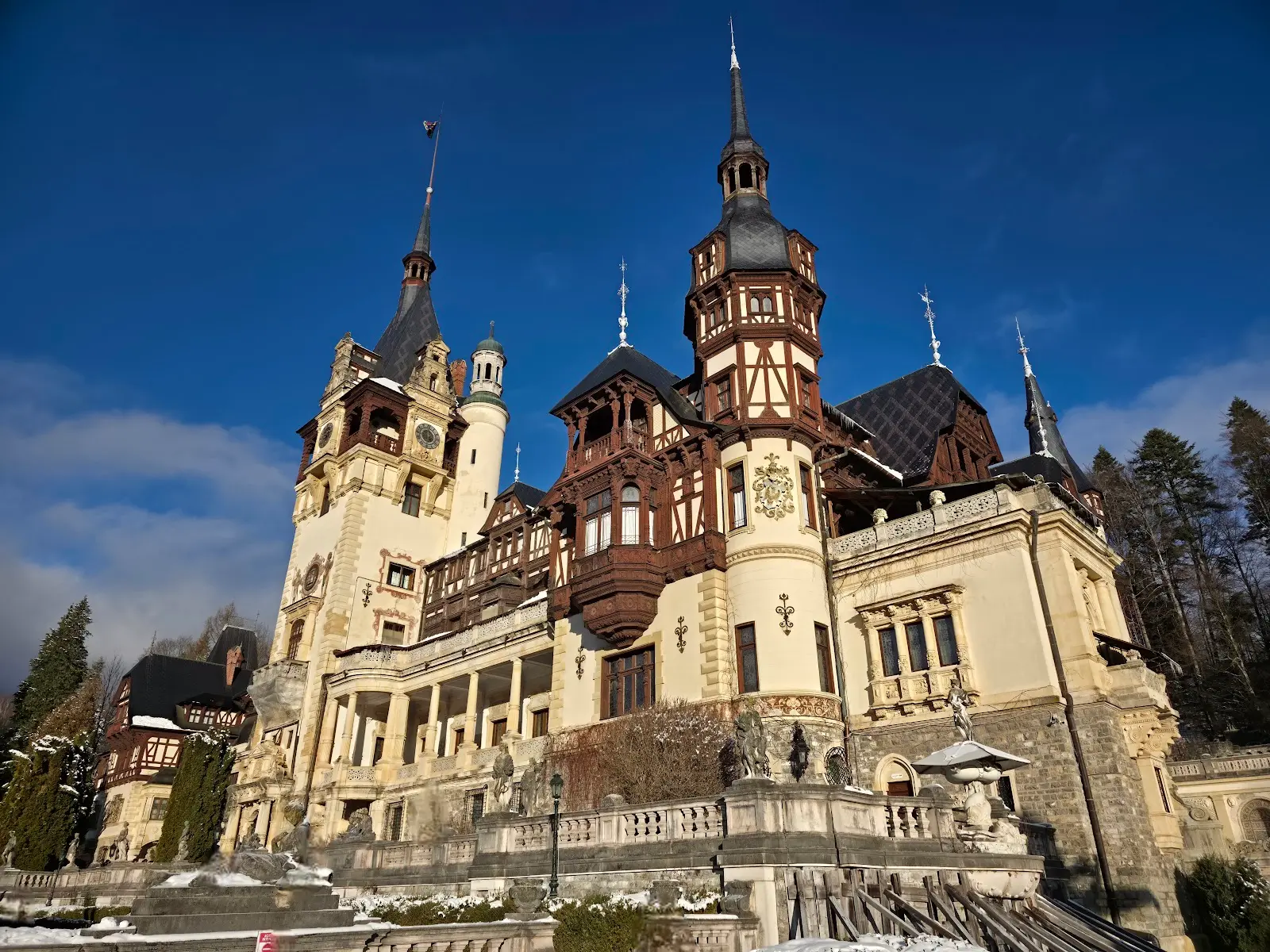
The 'Pearl of the Carpathians' in the Prahova Valley, around Peleș Castle.
Sinaia is Romania's most elegant mountain resort, nicknamed the "Pearl of the Carpathians", set in the Prahova Valley at the foot of the Bucegi Mountains in Prahova County. The town grew around a 17th-century monastery and became the preferred summer residence of the royal family, which shaped its aristocratic air.
Its emblematic landmark is Peleș Castle, a Neo-Renaissance masterpiece built by King Carol I in the late 19th century, with sumptuous interiors of carved wood, stained glass and armour — considered one of the most beautiful castles in Europe. Nearby stand the more intimate Pelișor Castle and Sinaia Monastery, which gave the town its name. The Belle Époque casino in the centre recalls the resort's golden age.
Sinaia is also a major centre for winter sports and hiking. A cable car climbs to the Bucegi Plateau, starting point for trails to the Sphinx and the Babele, famous rock formations, with spectacular mountain views. Summer offers climbing, cycling and hiking; winter brings ski slopes.
The town is easily reached by direct train from Bucharest (around 1.5–2 hours) or by car on the DN1. Winter draws skiers, while the rest of the year attracts hikers and history lovers. Sinaia is worth visiting for its rare combination of royal heritage, grand mountain scenery and old-world refinement.
Where to stay
All stays →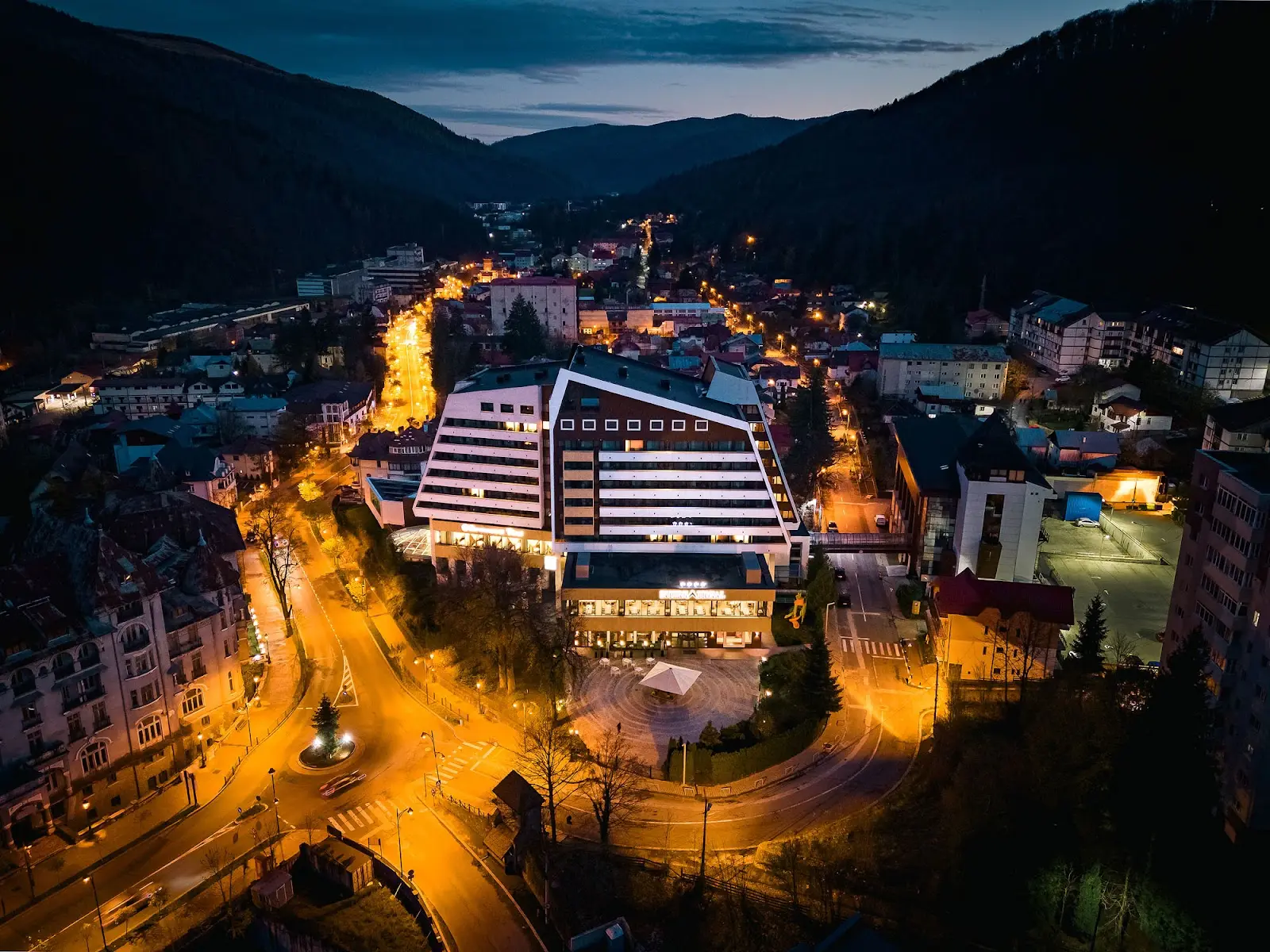 Resort
Hotel International Sinaia
Elegant rooms in a refined hotel with international restaurants, bowling and a spa with a pool.
 Boutique
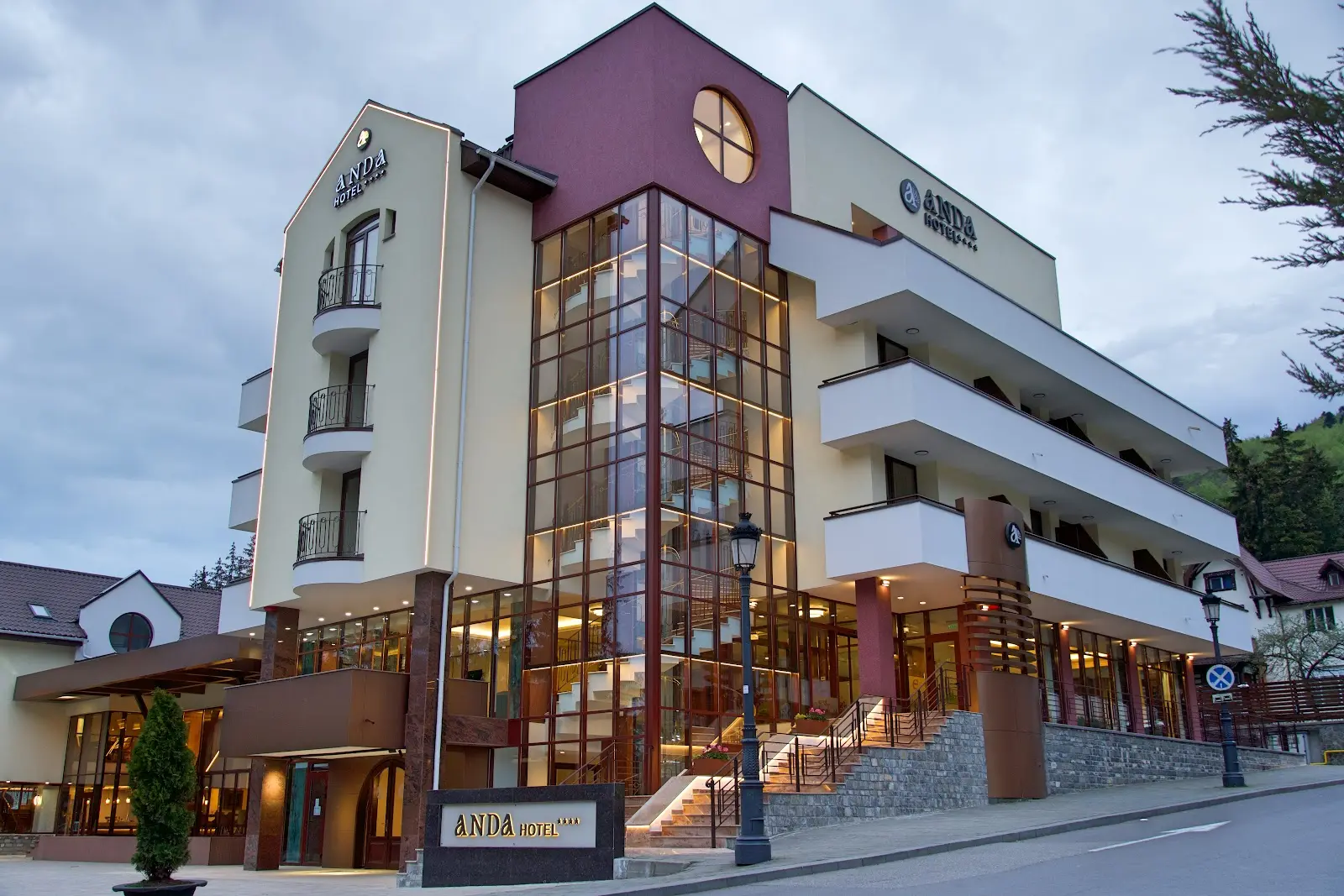
Hotel Anda Sinaia
A relaxed hotel with a bar/restaurant and conference space, plus free Wi-Fi and parking.
 Resort
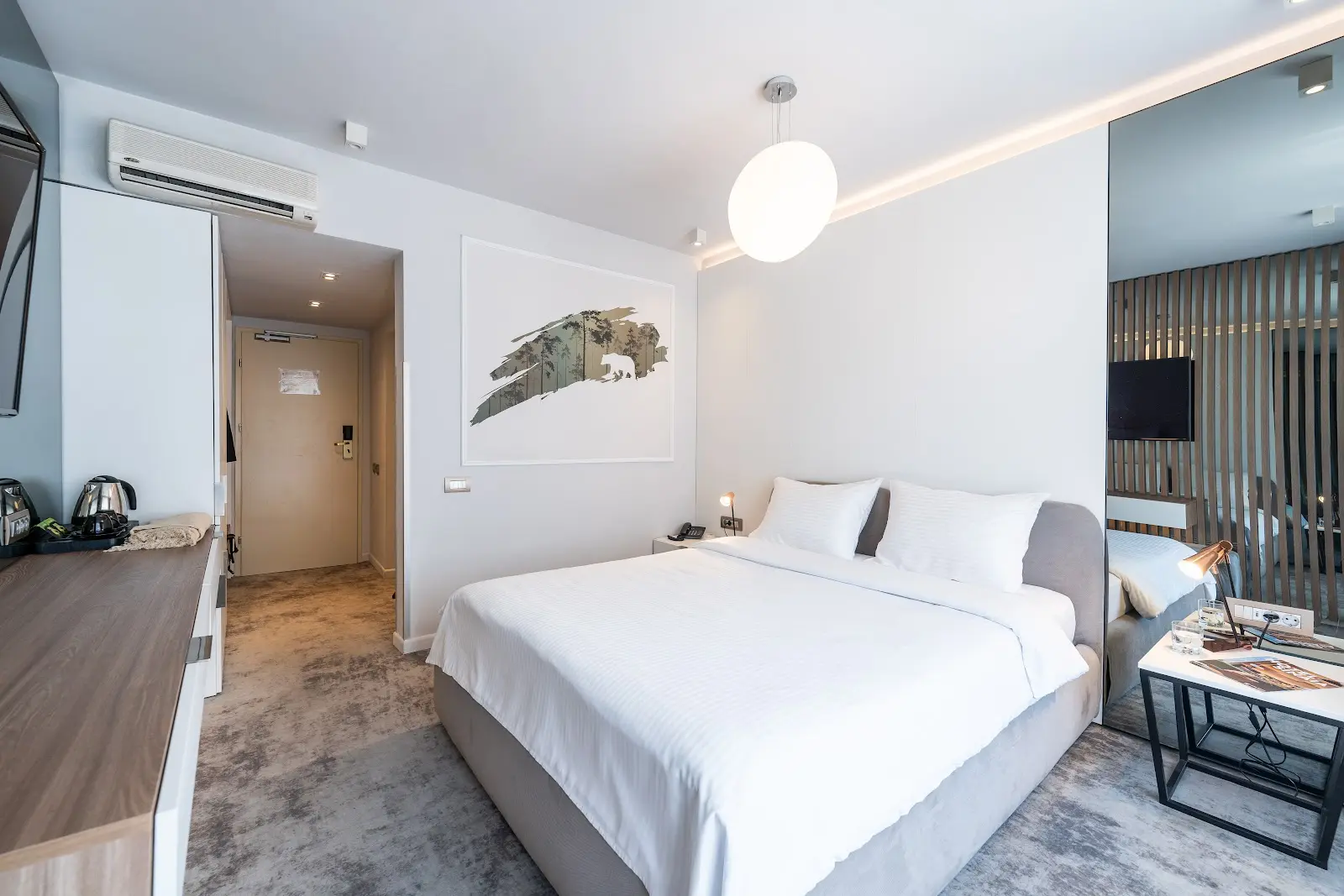
Hotel Rina Sinaia
A quiet hotel with a restaurant and a wine cellar, as well as a day spa, a pool and a fitness room.
 Luxury
Hotel Palace Sinaia
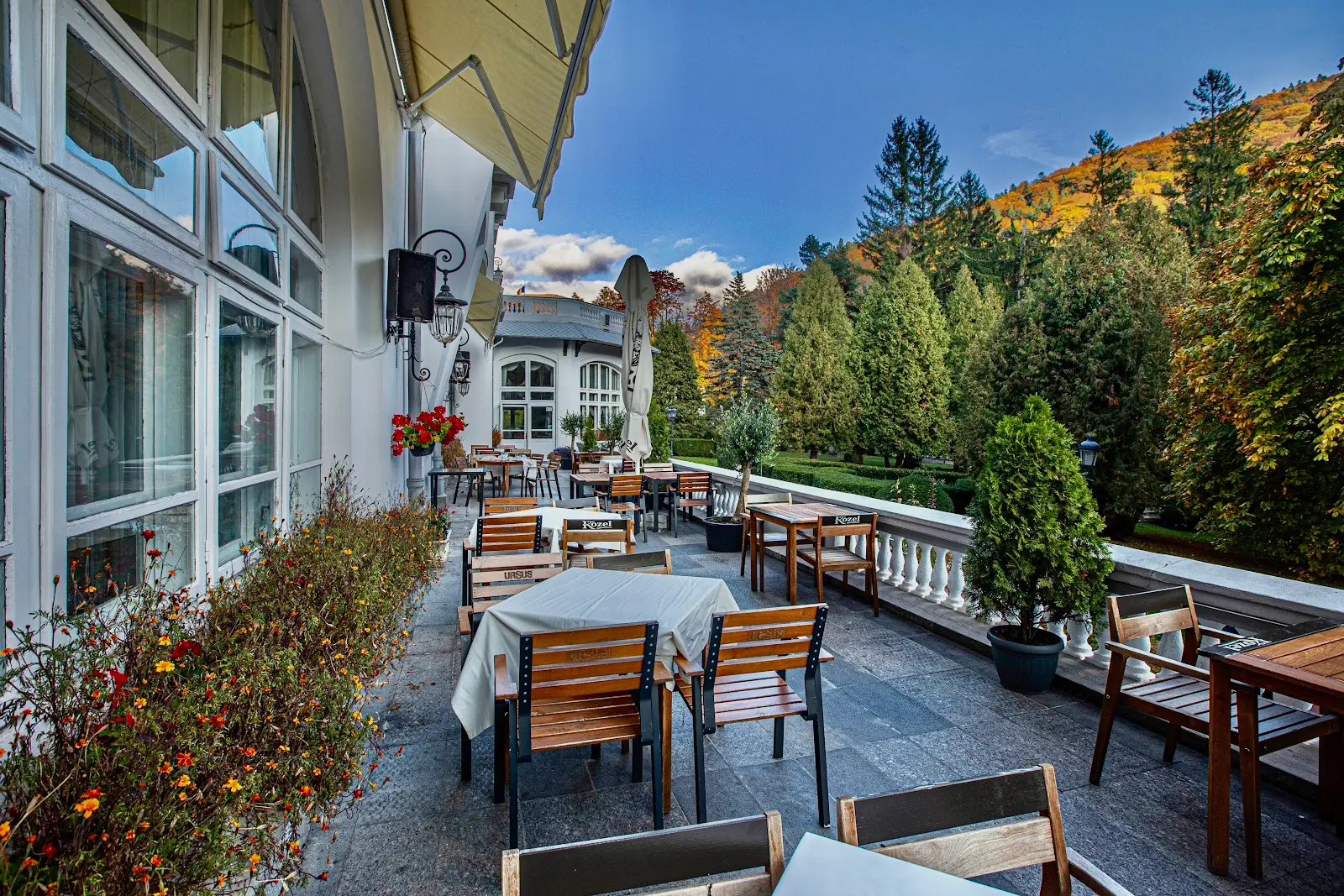
Simple rooms and refined suites in a 1911 hotel set in a park, plus an elegant restaurant and a spa.
Where to eat
All restaurants →
What to see
See all →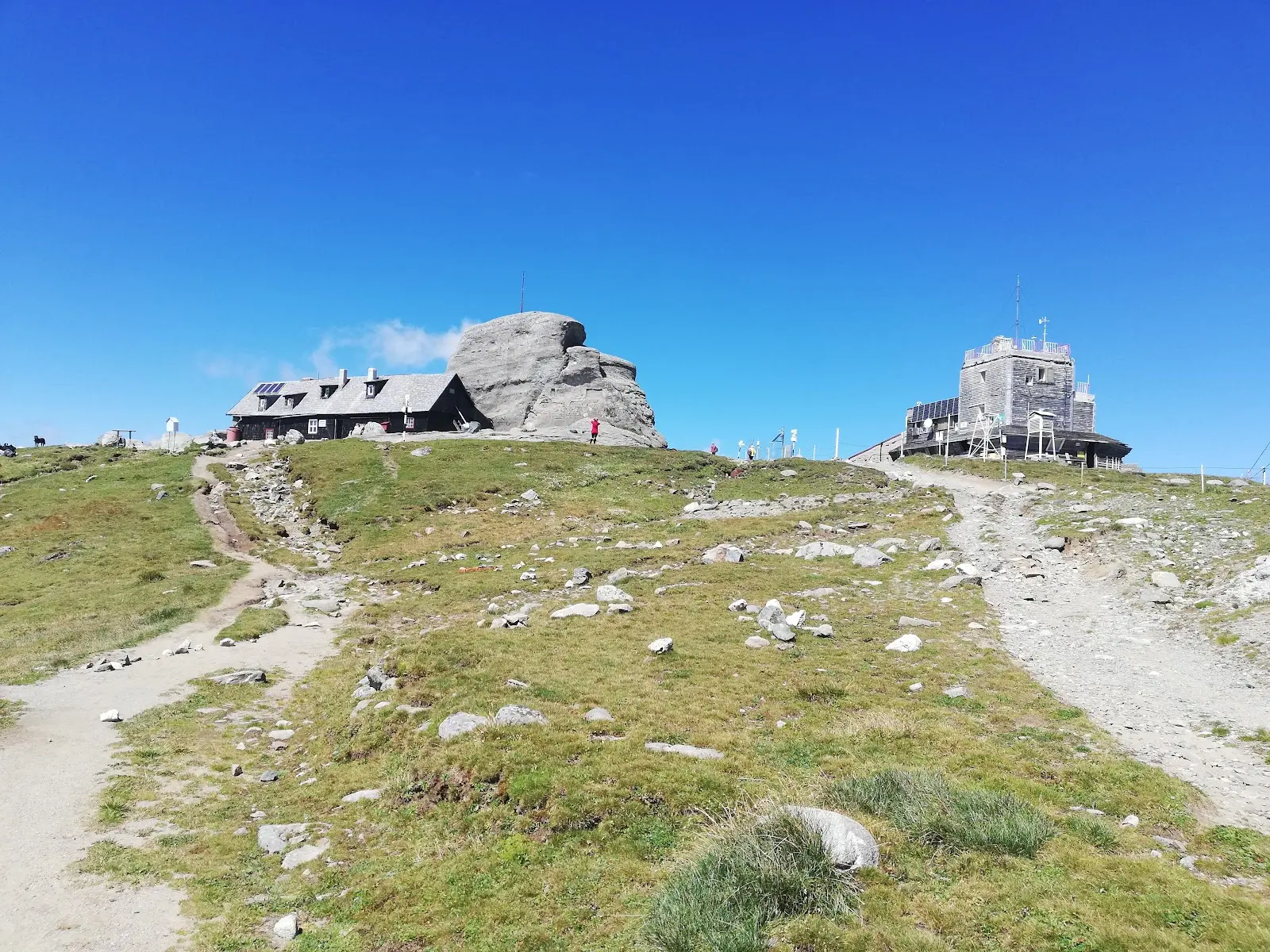 Mountain
Vârful Omu
Omu Peak is the highest summit of the Bucegi Mountains and one of the most important points of the Southern Carpathians, rising above 2500 metres. Set at the meeting of the main ridges of the massif, above the resort of Sinaia, the peak offers spectacular panoramas towards the surrounding summits, the Piatra Craiului Mountains and, on clear days, impressive distances. On the summit stand a chalet and a weather station, among the highest in the country. Access is exclusively on foot, along marked trails starting from Busteni, Sinaia or other points, demanding hikes that cross the alpine plateau and rocky ground. As this is a high-altitude peak, the weather is harsh and can change suddenly even in summer, with strong wind, fog and cold. Full mountain gear, good physical condition and caution are required. Omu Peak is a reference destination for hikers and mountain enthusiasts.
 Nature
Peștera Ialomiței
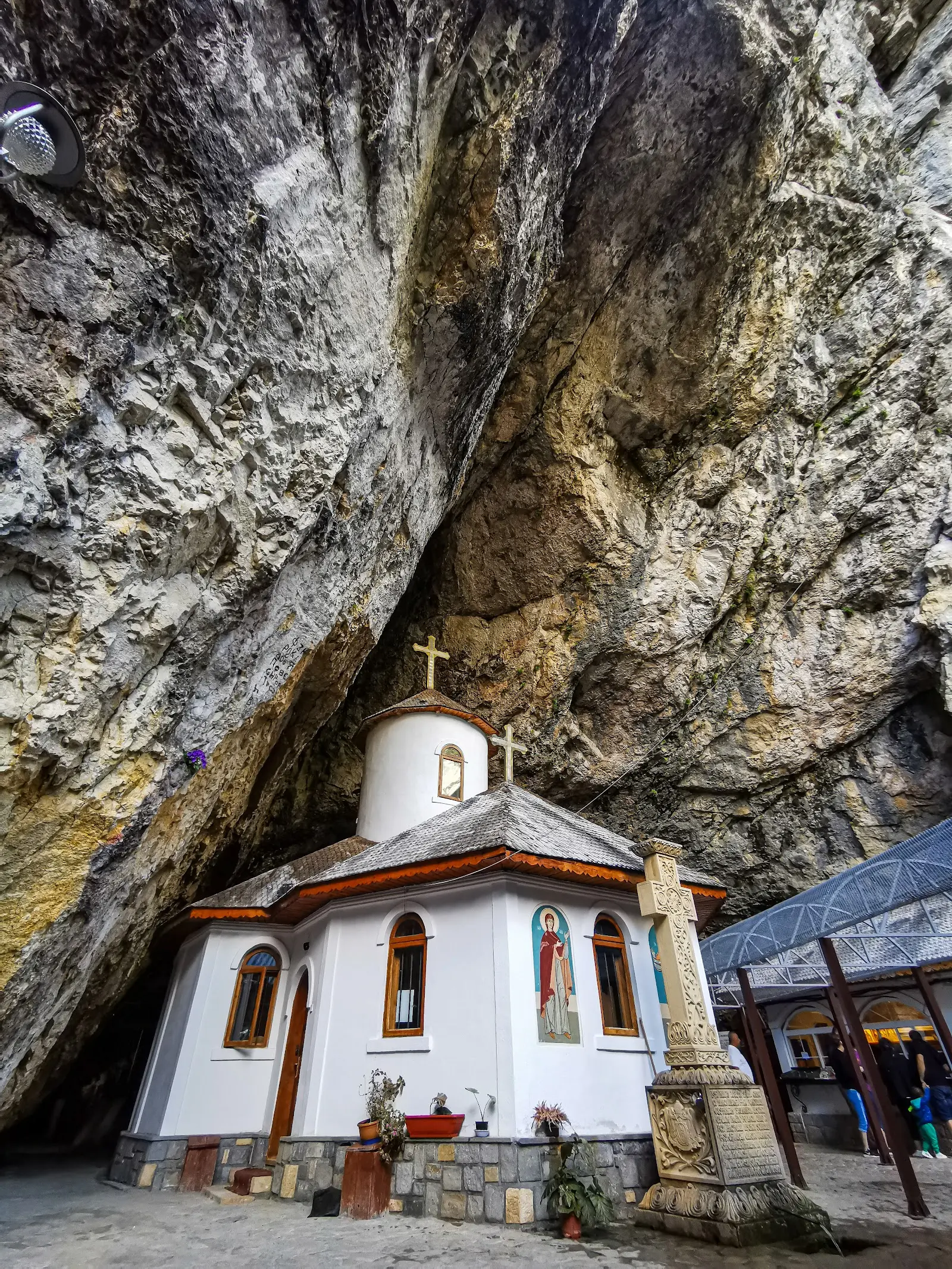
The Ialomița Cave opens in the steep wall of the Ialomița Gorge, in the Bucegi massif, right beside the hermitage of the same name, in one of Romania's most spectacular mountain settings. The wide entrance, guarded by a small white church set against the rock, leads into a gallery arranged for visits, with limestone formations, vaulted chambers and an underground stream. Though not very long, the cave impresses through its atmosphere and its natural surroundings: you reach it by climbing from Padina or the Peștera chalet, among alpine meadows and rock walls. The place also has a spiritual dimension, tied to the tradition of hermits who withdrew here over the centuries. It is a good stop for hikes in the Bucegi, easily combined with the trails to the Sphinx and the Babele. Dress warmly — the cave is cold all year — and check access on the forest road, which depends on the season.
 Nature
Sfinxul din Bucegi
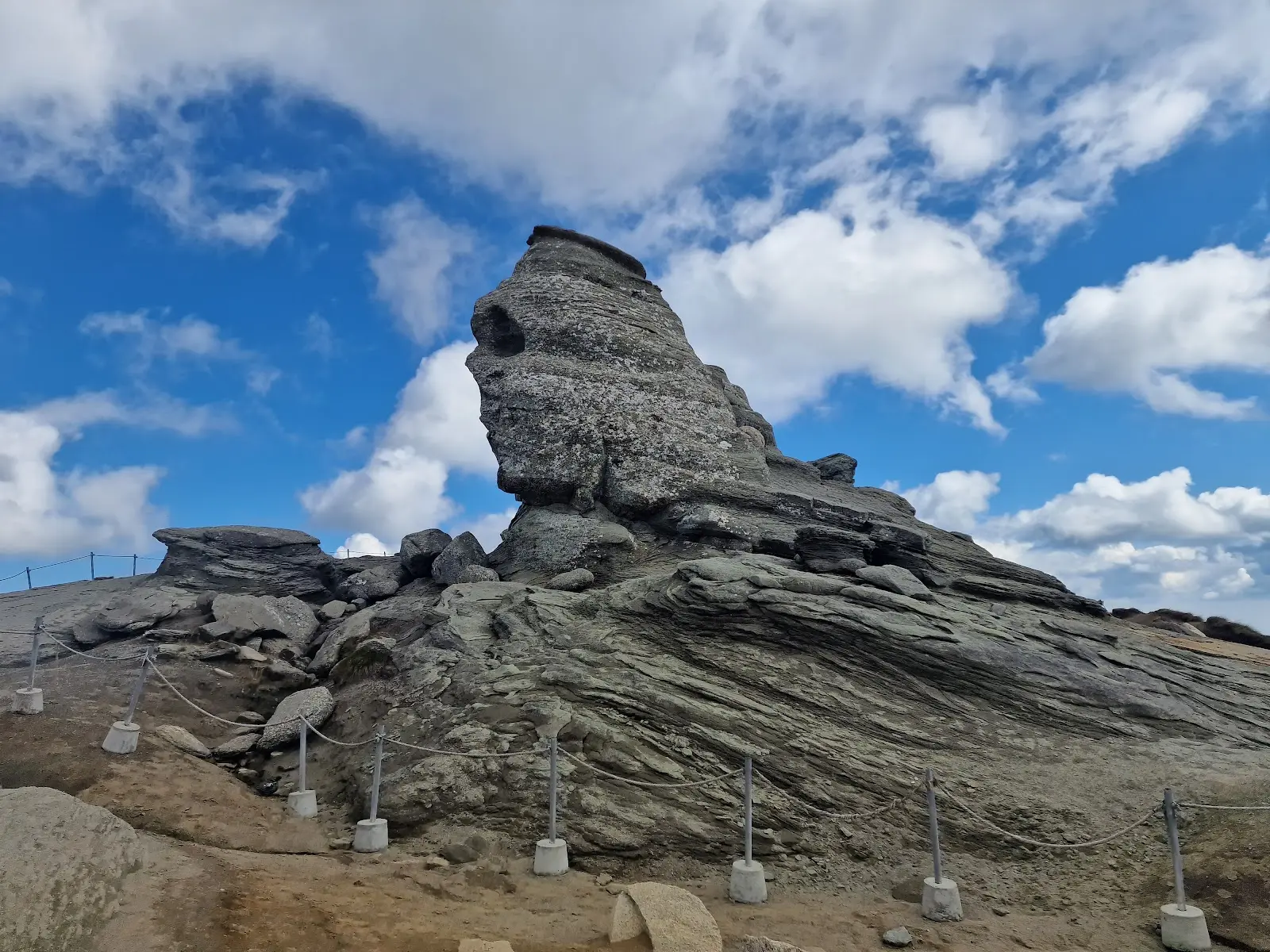
The Bucegi Sphinx is one of the most famous geological formations in Romania, a natural megalith set on the Bucegi plateau at over 2,200 metres, near the resort of Sinaia and the Babele peak. The rock's silhouette, shaped over thousands of years by the erosion of wind, frost and water, recalls a human face when seen from a certain angle, which has earned it a resemblance to the great Egyptian Sphinx and many legends about energies and a supposed mystical charge. Alongside the formations known as Babele, the Sphinx is part of a spectacular alpine landscape, with expanses of meadow, rock and wide panoramas over the Carpathians. Access is usually by cable car from Bușteni or Sinaia, followed by a short hike across the plateau, or by longer mountain trails. The place is heavily visited, especially in summer. Visitors are advised to prepare for changeable alpine conditions, since the weather at altitude can quickly turn cold and foggy even in the warm season.
 Nature
Babele
Babele are among the most famous geological formations in the Bucegi Mountains, set on the high plateau near the Baba Mare peak, above the resort of Sinaia. These oddly shaped rocks, resembling mushrooms or human figures, were formed by the differential erosion of the rock under the action of wind, rain and frost over thousands of years. Together with the nearby Bucegi Sphinx, Babele have given rise to numerous folk legends and mystical interpretations, becoming a symbol of the massif. The plateau offers wide views over the surrounding ridges and the valleys below. Access is usually by cable car from Busteni or along marked ridge trails, and a chalet stands nearby. As this is a high-altitude area, the weather can change quickly, so suitable clothing and caution are needed. Babele remain an essential attraction for visitors to the Bucegi Mountains.
 Nature
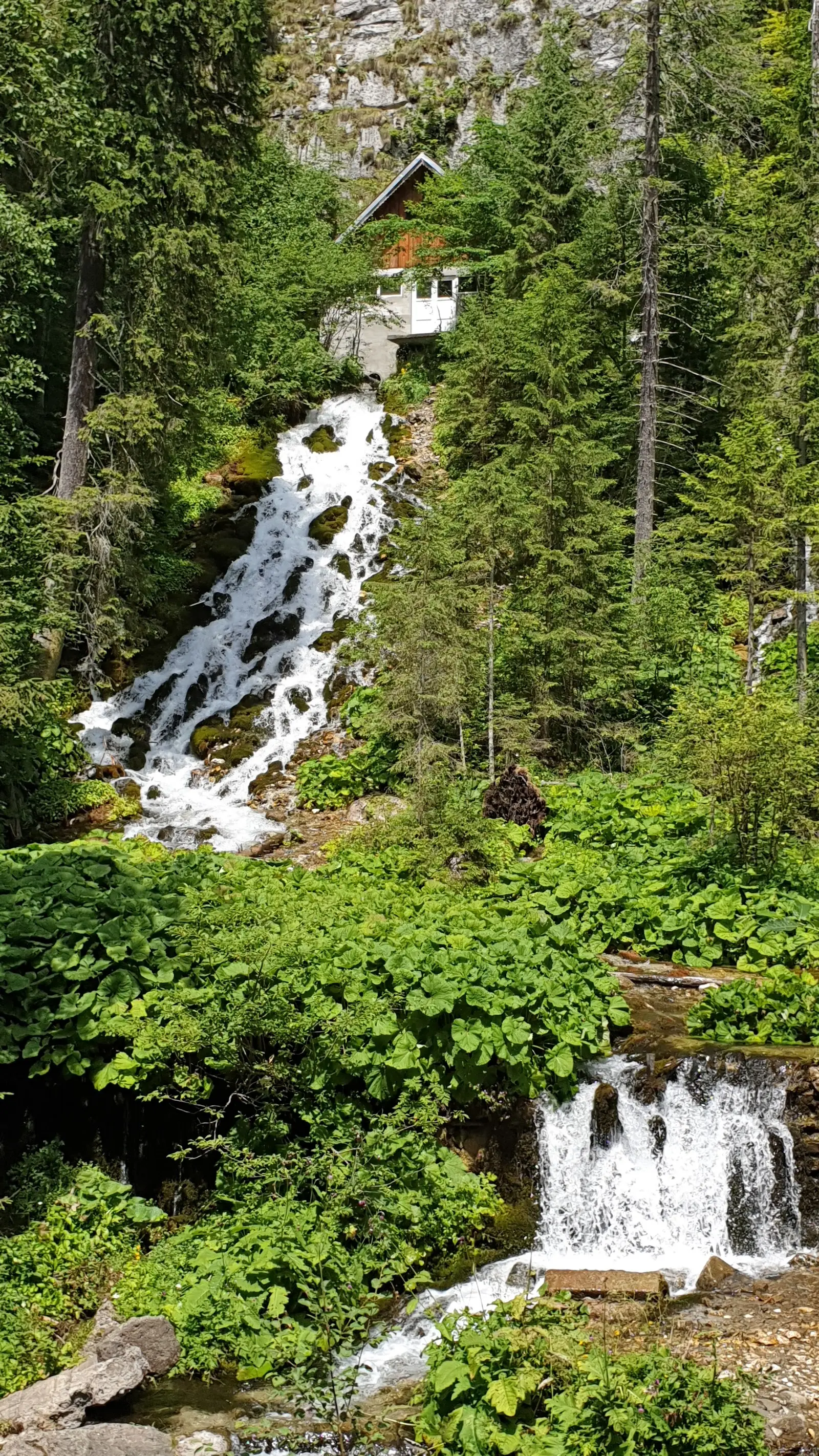
Cascada 7 Izvoare
The 7 Springs Waterfall is a beautiful cascade set in the Bucegi Mountains, near the resort of Sinaia, in a particularly picturesque mountain setting. The fall forms on the course of a mountain stream fed by springs, the water tumbling over rock steps in a forest landscape. The area is appreciated by hikers and by holidaymakers seeking the coolness and quiet of the mountains, and it is a point of interest on the trails around Sinaia. Nearby stand a dam and a reservoir, as well as an arranged area offering opportunities for recreation. Access is by forest road and then by paths through coniferous forests, in a pleasant hike of moderate difficulty. The surroundings, with wooded slopes and clean mountain air, make the visit a relaxing experience. Hiking footwear and care on the wet sections near the water are recommended. The 7 Springs Waterfall rounds off a visit to the resort of Sinaia and the Bucegi Mountains nicely.
CastleCastelul Peleș
Built between 1873 and 1914 as the summer residence of King Carol I, Peleș Castle in Sinaia is considered one of the most beautiful palaces in Europe and a statement of German Renaissance style at the foot of the Bucegi mountains. Its silhouette of pointed towers, wooden balconies and ornate façades emerges from a forest of conifers at the end of an elegant driveway. The interior overwhelms: more than one hundred and seventy rooms, walnut-carved panelling, stained glass, armour, art collections and one of the first electrical and air-conditioning systems in a European palace. The hall of honour with its movable glass ceiling, the library with a secret passage and the armoury are unforgettable. Around it, the park with terraces, statues and fountains completes the mood. Check the schedule and any closing days before visiting.
 Monastery
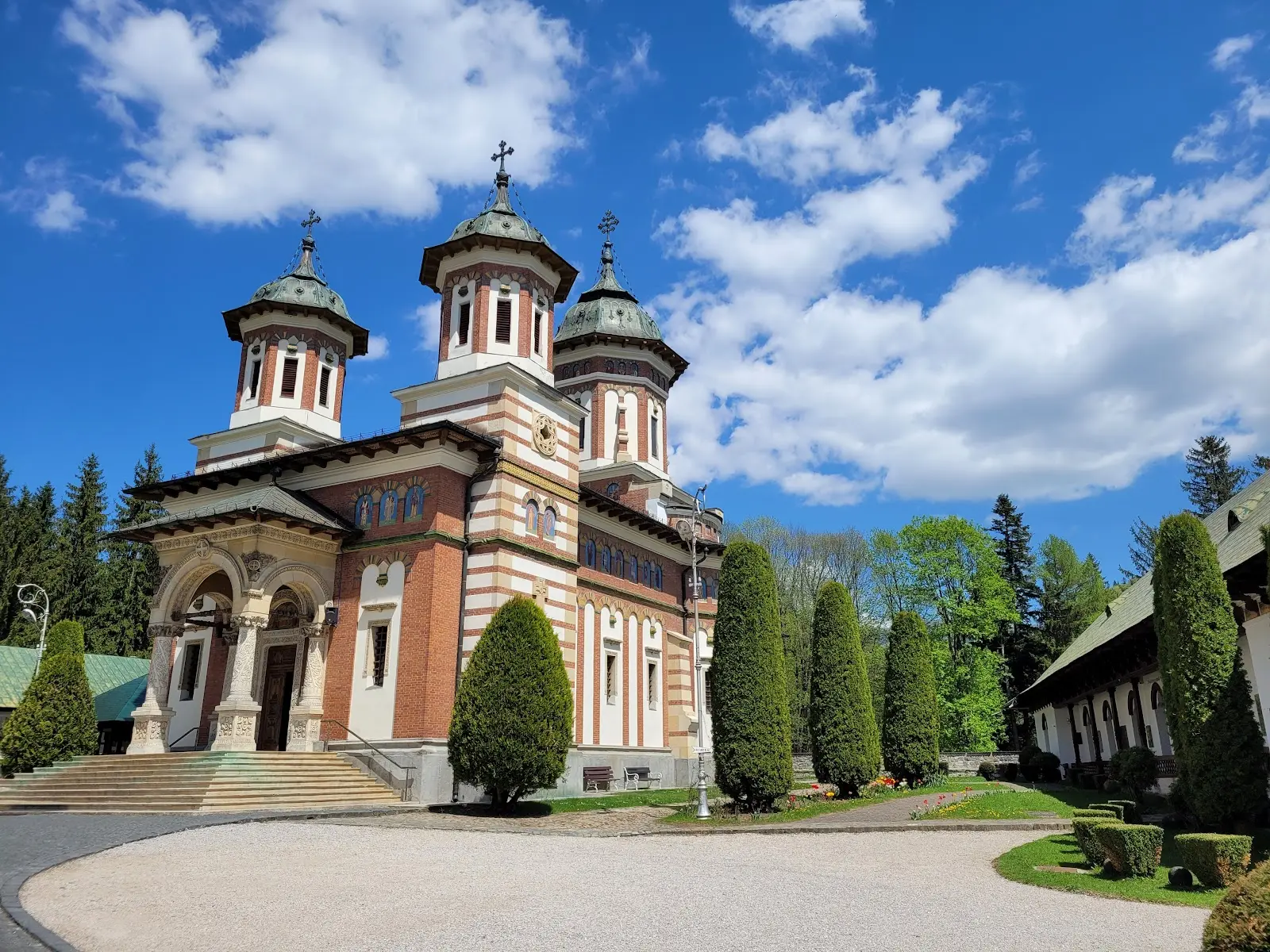
Mănăstirea Sinaia
Sinaia Monastery, founded in 1695 by nobleman Mihail Cantacuzino after a pilgrimage to Mount Sinai, gave its name to the whole town that later grew around it. The complex has two churches: the old church, from the 17th century, with Brâncovenesc-style painting, and the great church, built in the 19th century — the first in Romania lit by electricity, in the era of King Carol I, who lived here temporarily before Peleș Castle was finished. The quiet courtyard, with white cells and a small museum holding religious objects and the first Bible printed in Romanian, offers a pleasant contrast to the resort's bustle. Set at the foot of the Bucegi, the monastery is often the first stop for tourists heading up to Peleș, just a few minutes' walk away. It is a place of reflection and an important page in the history of the Royal House. Mind the dress code when entering the churches and check service times.
 Landmark
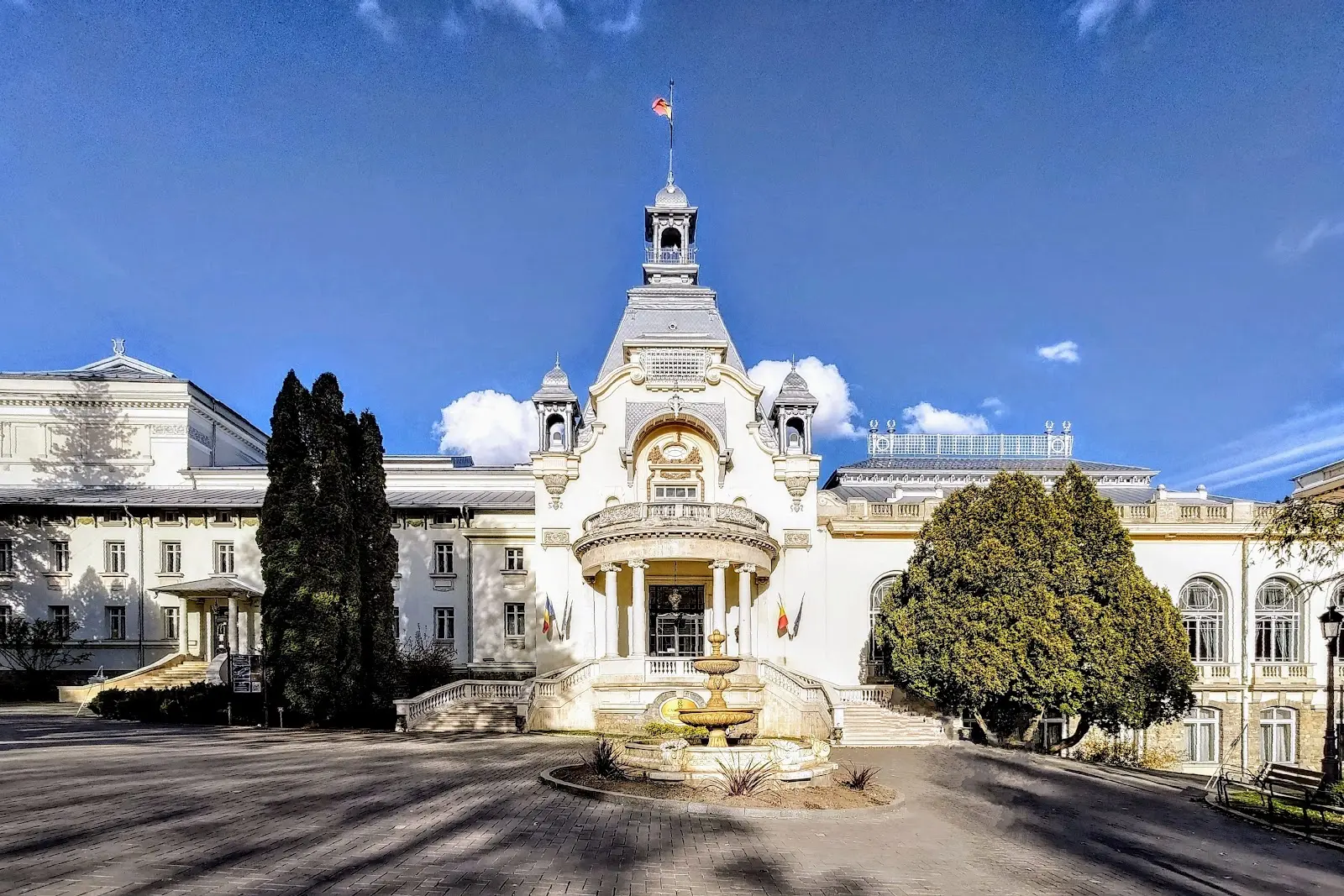
Cazinoul din Sinaia
The Sinaia Casino is an emblematic building of this resort on the Prahova Valley, raised in the early twentieth century in an eclectic style inspired by the great casinos of Europe. Built on the site of the former royal gardens, the edifice was designed by the architect Petre Antonescu and recalls the resort of Monte Carlo, a model for the elite of the time. At its opening, the casino was a meeting place for the aristocracy and distinguished guests, with gaming rooms, a restaurant and sumptuous performance spaces. Today the building serves as a conference and events centre, preserving interiors decorated with paintings, stuccoes and elegant chandeliers. Set in the park at the centre of the resort, near Peles Castle, the casino is a natural stop for visitors to Sinaia. Its imposing facade and mountain surroundings make it one of the most photographed sights of the area.
 Castle
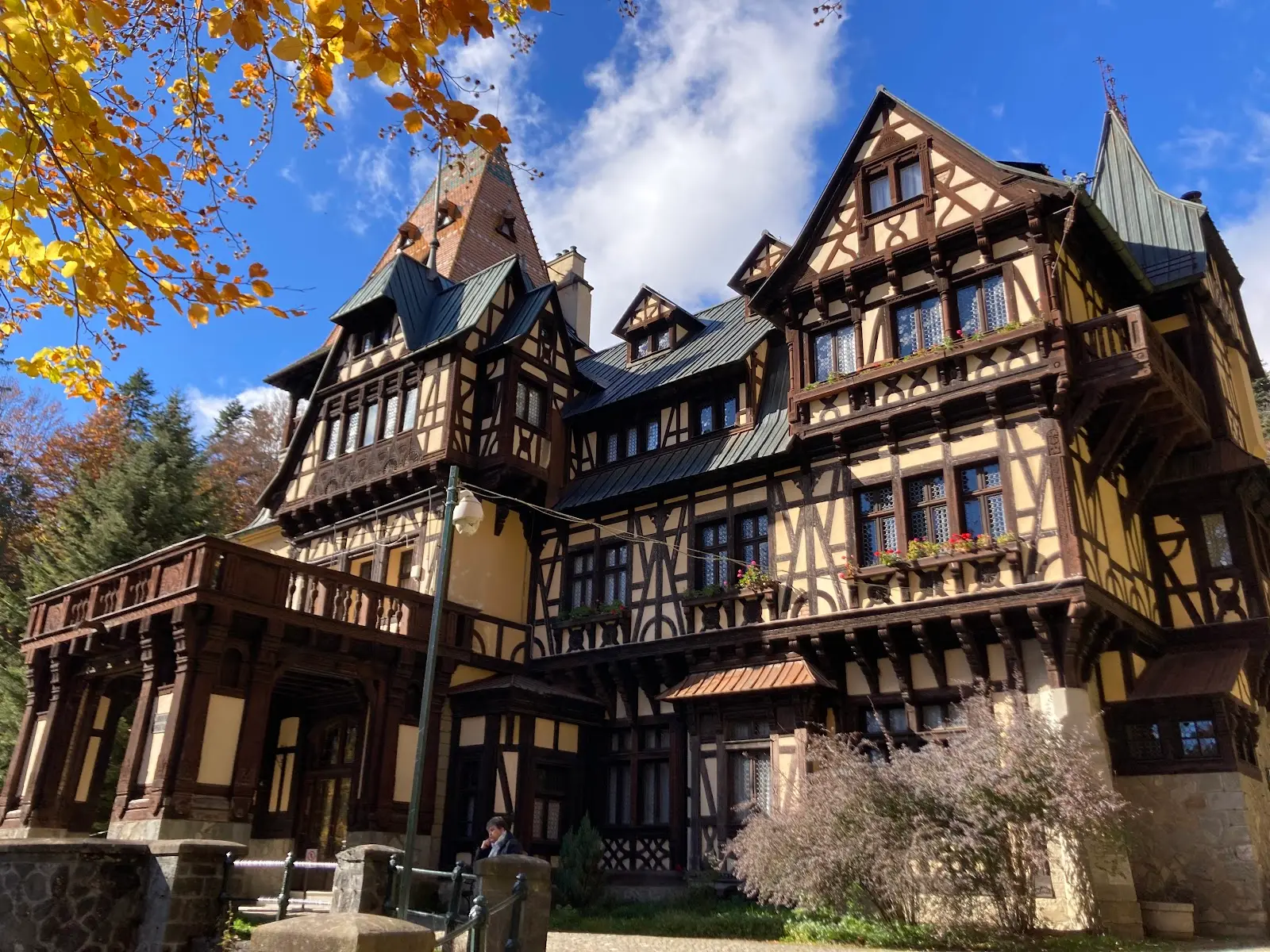
Castelul Pelișor
Pelisor Castle stands in Sinaia, on the Prahova Valley, near the grand Peles Castle, to which it is closely tied. Built in the early twentieth century, Pelisor was conceived as the residence of Crown Prince Ferdinand and his wife, Princess Marie, the future king and queen of Romania. Unlike the splendour of Peles, Pelisor has a more intimate and luminous air, with interiors in the Art Nouveau style, decorated according to the refined taste of Queen Marie. The best-known room is the Golden Room, a remarkable space adorned with gold leaf and motifs inspired by folk art. The castle preserves furniture, tapestries and personal objects of the royal family, offering an authentic image of court life. Set in the same park as Peles, within a splendid mountain setting, Pelisor is a delightful visit for enthusiasts of history and decorative art who explore the Prahova Valley.
Frequently asked questions
What is Sinaia known for?+
Sinaia is best known for sights such as Vârful Omu, Peștera Ialomiței, Sfinxul din Bucegi.
How many days do you need in Sinaia?+
One to two days is enough to see the highlights of Sinaia; stay longer to use it as a base for day trips.
Where should I stay in Sinaia?+
See our selected stays above, or check live rates and availability on the accommodation map.