Transylvania
Sibiu
A former European Capital of Culture, with Saxon squares and the famous roof 'eyes'.
Sibiu (in German Hermannstadt) is one of the most beautiful cities in Transylvania and the former capital of the Transylvanian Saxons, set on the Cibin River at the foot of the Cindrel Mountains. Founded in the 12th century, it was long the region's leading economic and cultural centre, and in 2007 it served as European Capital of Culture.
The historic centre divides into an Upper Town and a Lower Town, linked by passages and stairways. Its heart is a trio of connected squares: the Large Square (Piața Mare), dominated by the Brukenthal Palace — home to one of the oldest art museums in Europe — the Small Square (Piața Mică) with its cast-iron Bridge of Lies, and Huet Square, where the Gothic Evangelical Church stands. The old houses have the famous "eyes of Sibiu", dormer windows that seem to watch the street, giving the town an unmistakable air. The Council Tower offers a sweeping view over the red rooftops.
Sibiu is also renowned for the ASTRA Museum, one of the largest open-air ethnographic museums in Europe. Local cuisine retains Saxon influences, and the area is the gateway to Mărginimea Sibiului, a pastoral shepherd region, and to the Transfăgărășan, the famous alpine highway.
The city has its own international airport and good road and rail links. Summer and early autumn are ideal, while its Christmas market is among the finest in the country. Sibiu is worth visiting for its medieval elegance, rich cultural life and relaxed atmosphere.
Where to stay
All stays →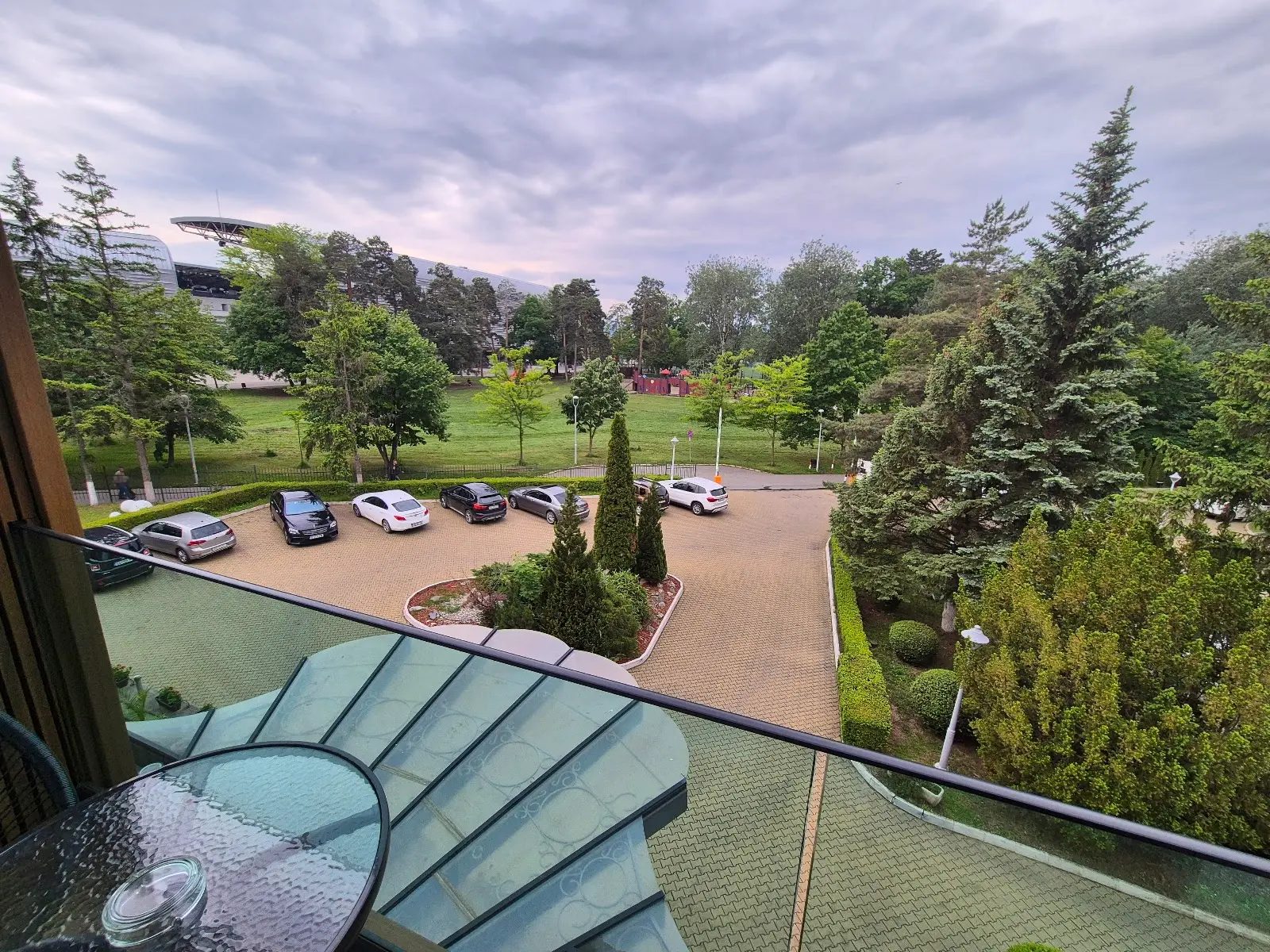 Boutique
Hotel Silva Sibiu
A modest hotel with a restaurant and a bar, plus free Wi-Fi, parking and breakfast.
 Luxury
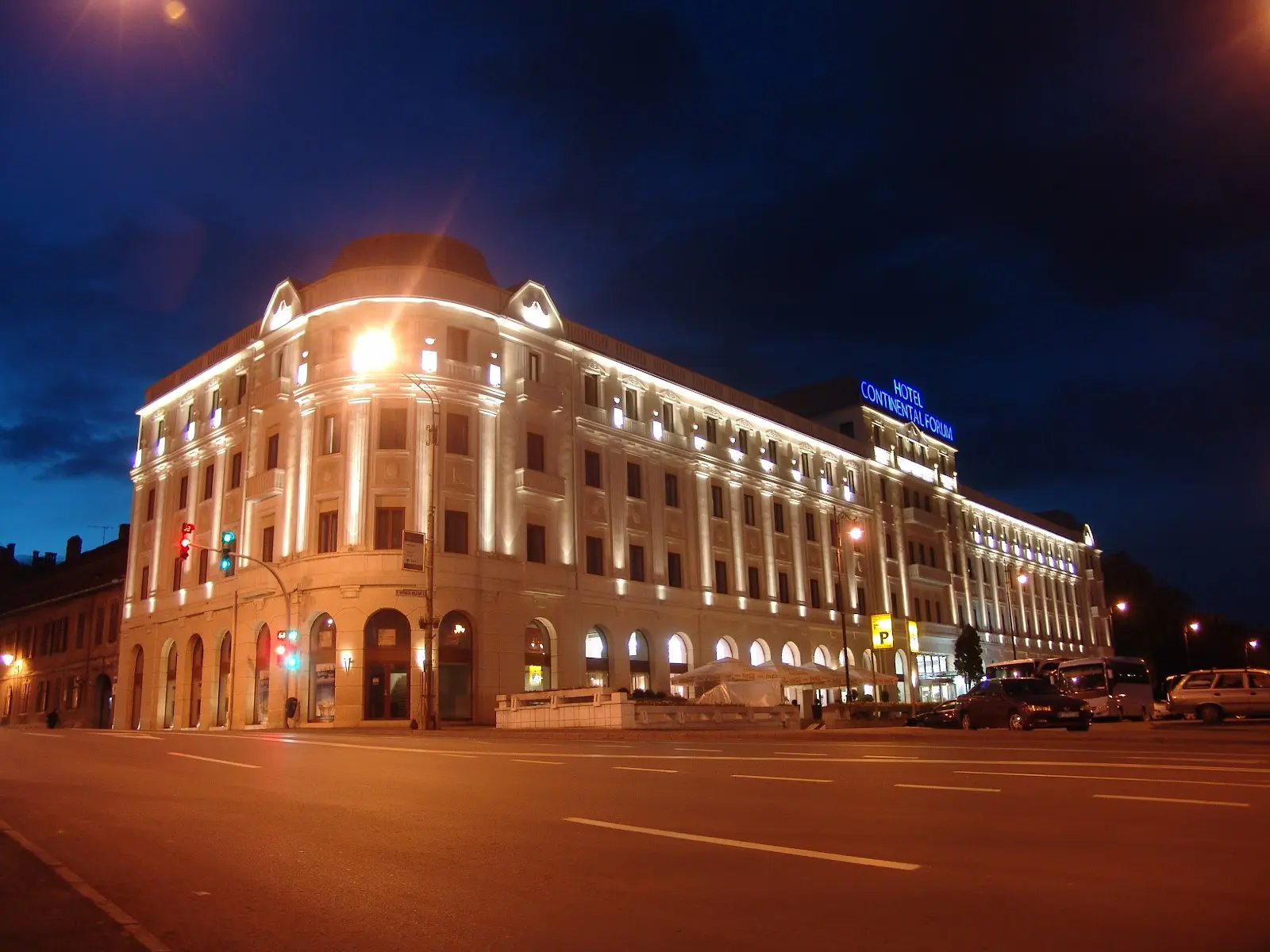
Hotel Continental Forum Sibiu
Refined accommodation in a restored 19th-century building, with a restaurant, a bar and a café.
 Luxury
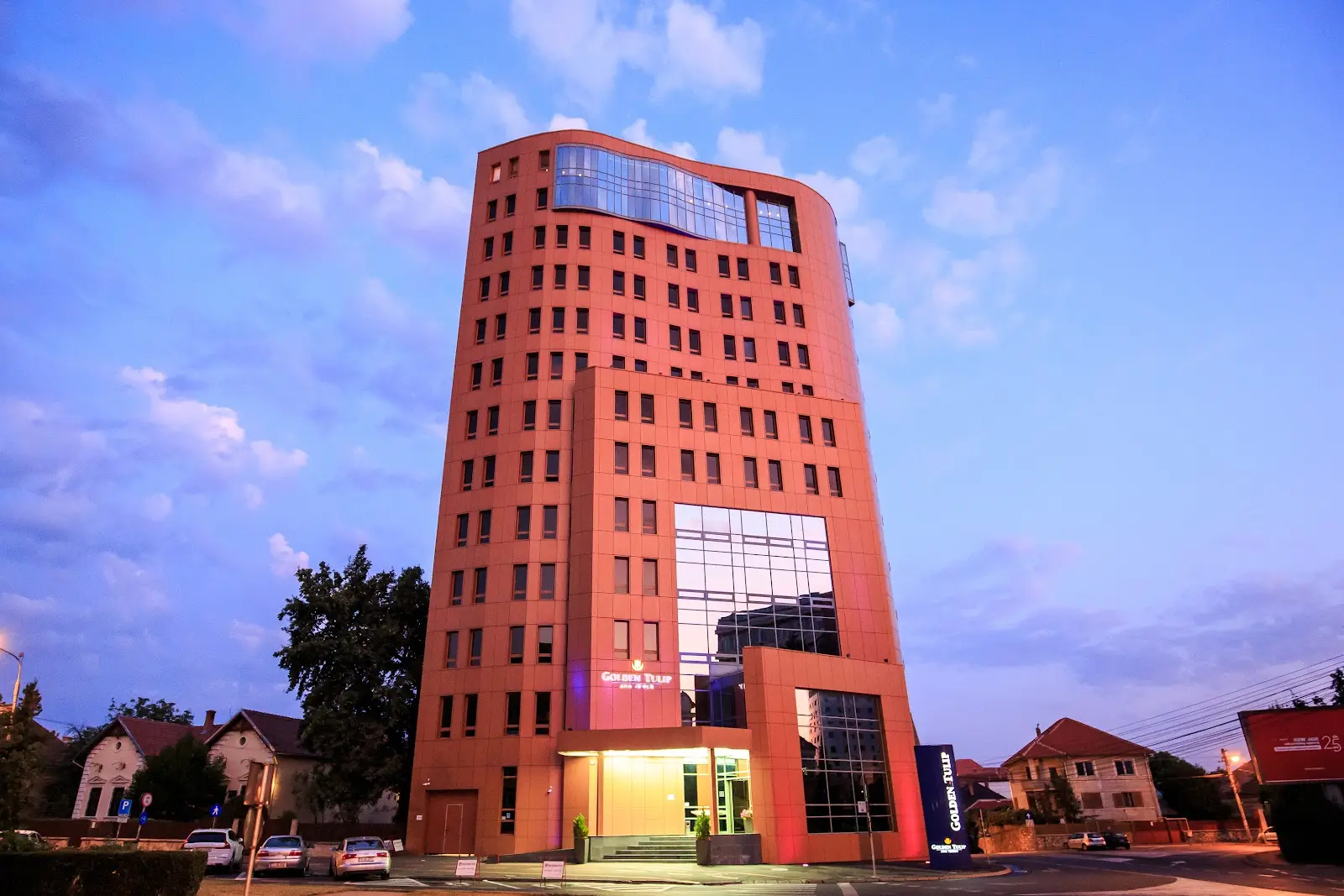
Hotel Golden Tulip Ana Tower Sibiu
A luxurious option offering contemporary rooms and a modern restaurant, plus a bar, a fitness room and a spa area.
 Boutique
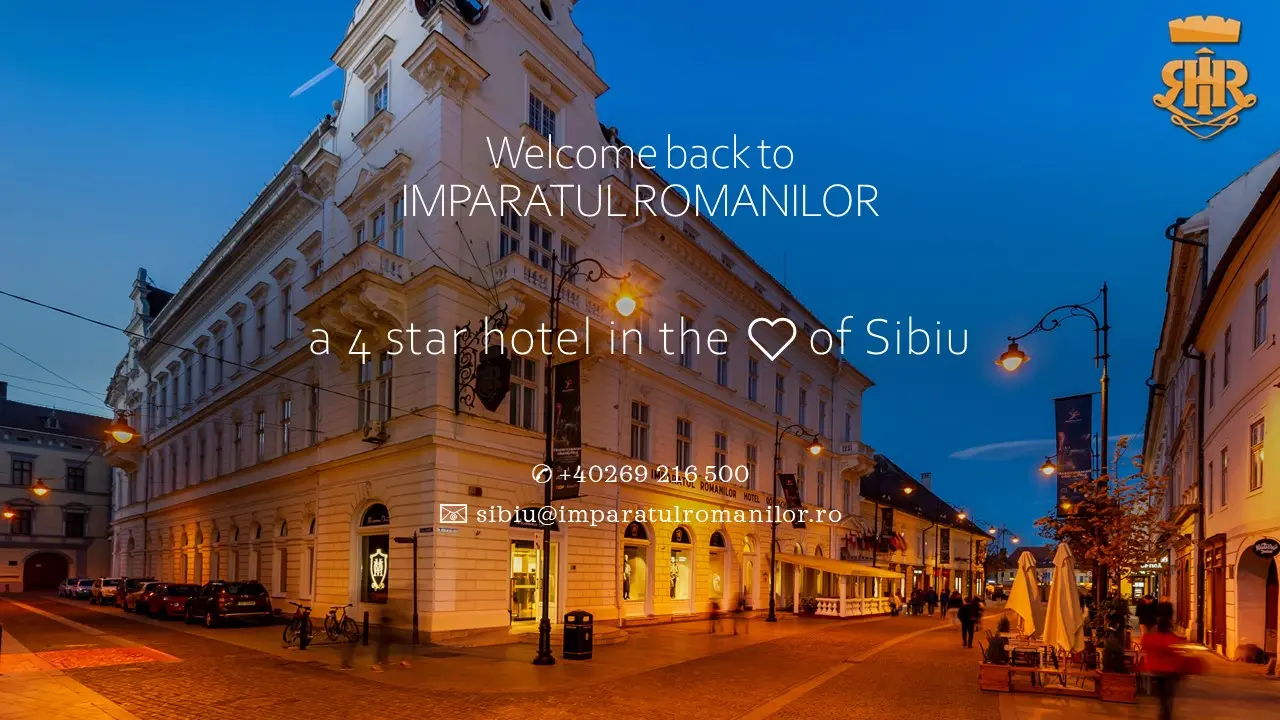
Hotel Imparatul Romanilor Sibiu
A refined hotel dating from 1555, with a restaurant, an indoor pool, a fitness room and free breakfast.
 Boutique
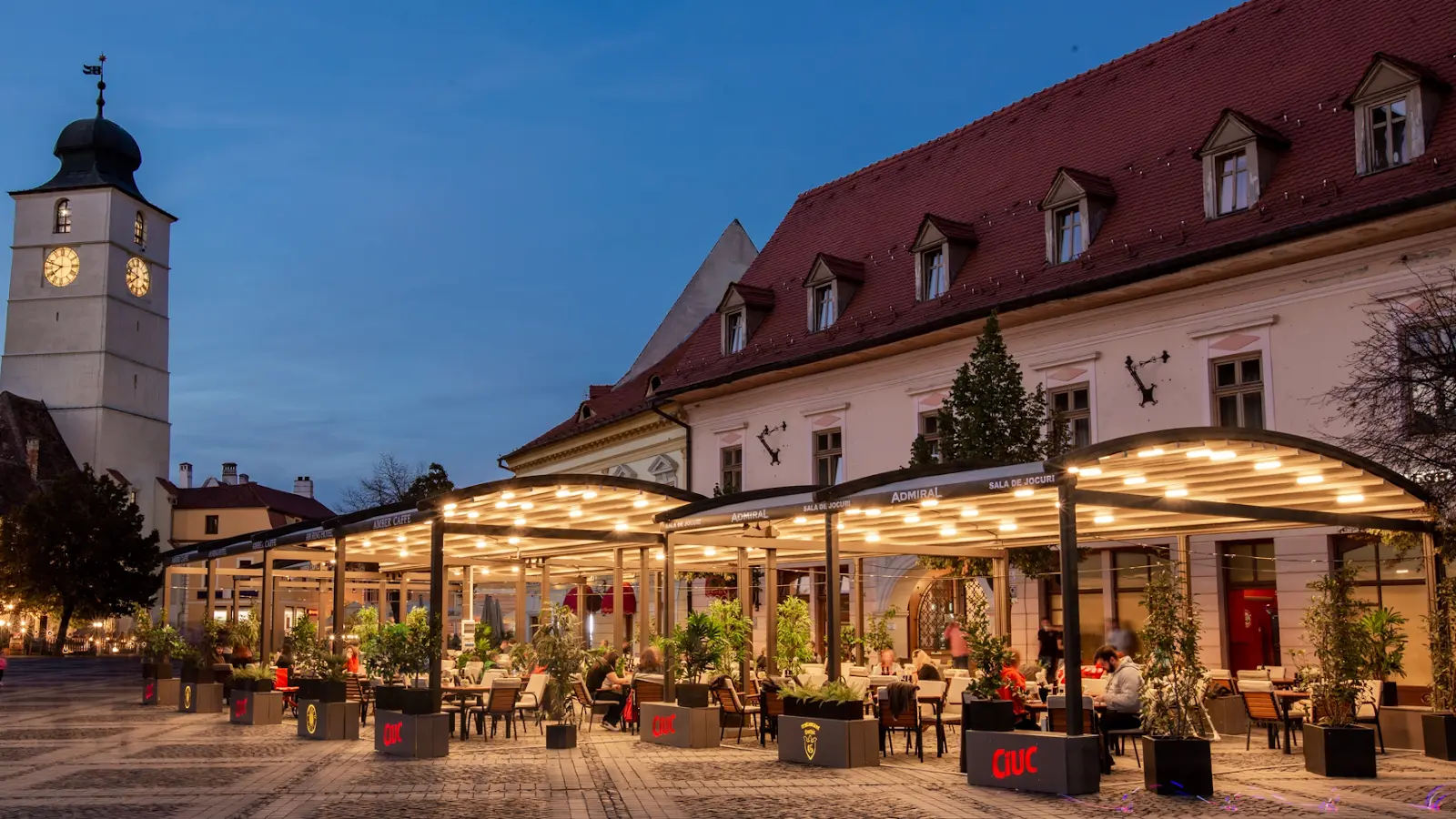
Hotel Am Ring Sibiu
Comfortable rooms in a charming multi-storey hotel with a restaurant, a terrace and views of the Grand Square.
Where to eat
All restaurants →
What to see
See all →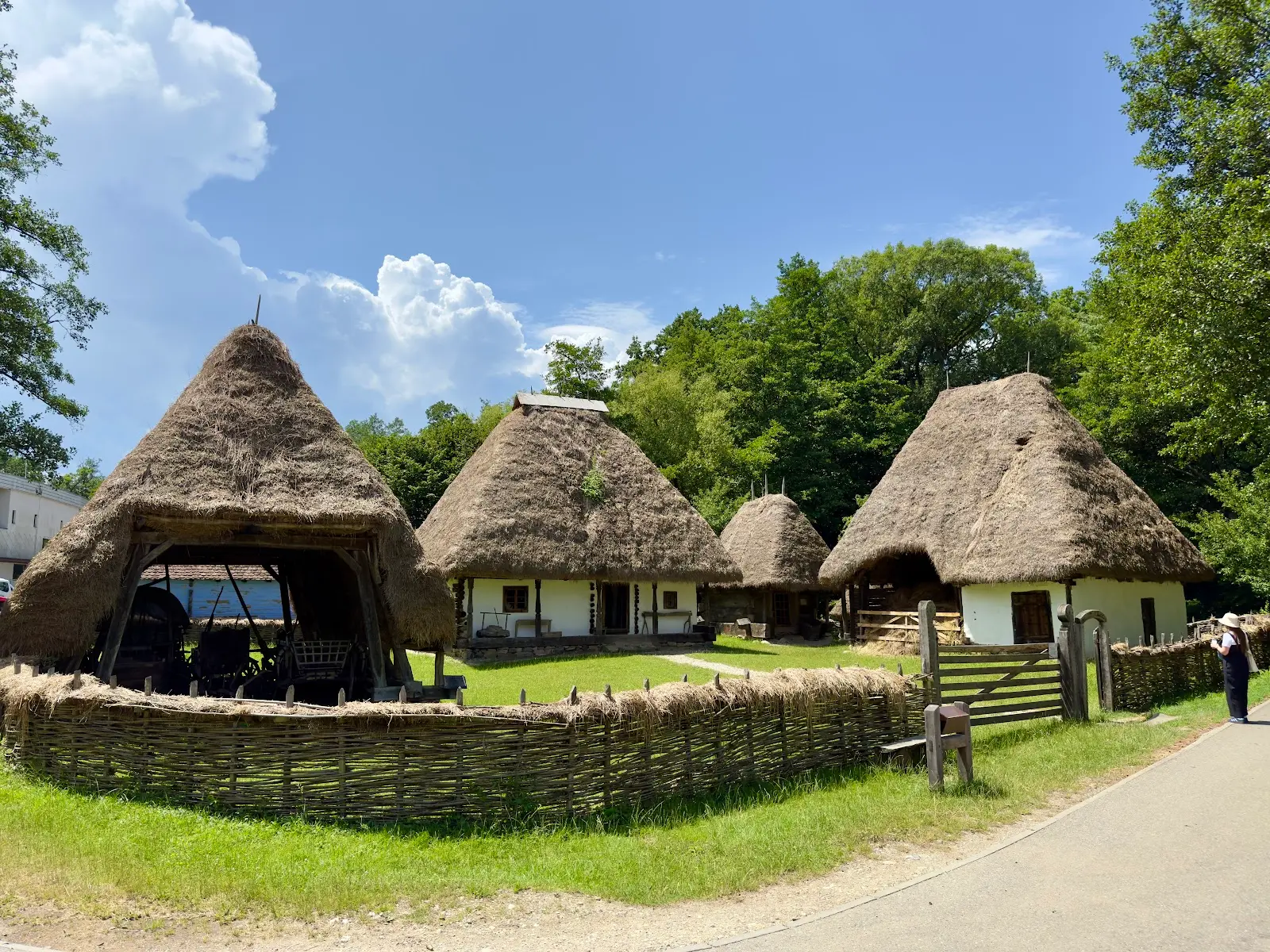 Museum
Muzeul ASTRA
The ASTRA Museum in Sibiu, set in the Dumbrava Forest, is one of the largest open-air museums in Europe, a true reconstruction of the traditional Romanian village across dozens of hectares of forest and meadows. Over four hundred authentic structures — peasant houses, farmsteads, water and wind mills, craft workshops, wooden churches and folk technical installations — were brought from every region of the country and carefully reassembled, telling the story of Romanian rural civilisation. Visitors follow picturesque paths beside a lake, discovering crafts, demonstrations and traditional fairs held periodically. It is a living lesson in ethnography and a delightful place to walk in any season, especially in autumn. Set aside several good hours to explore it at leisure and wear comfortable footwear. Check the visiting schedule and the calendar of hosted events.
 Church
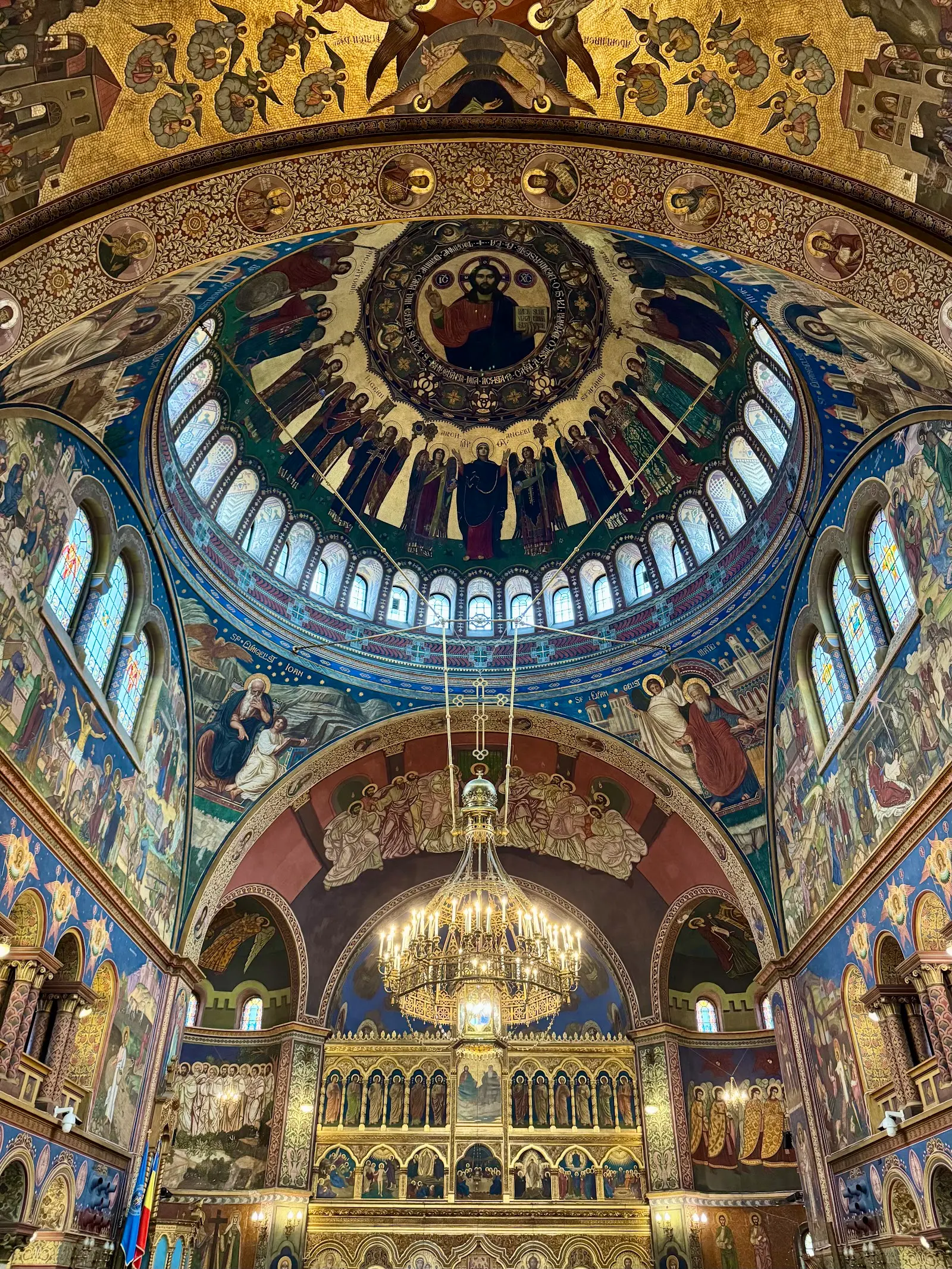
Catedrala Sfânta Treime din Sibiu
The Holy Trinity Cathedral of Sibiu is the city's main Orthodox cathedral and an important landmark of Transylvanian religious architecture. Raised in the early twentieth century, the cathedral was built in a Neo-Byzantine style, visibly inspired by the great Hagia Sophia church in Constantinople, with an imposing central dome and a spacious, bright interior decorated with rich murals and a remarkable iconostasis. The edifice reflects the assertion of the Romanian Orthodox community of Sibiu at a time when the city was dominated by the Saxon tradition and Lutheran churches. The facade, with its towers and alternating brickwork, and the tall dome roofed in ceramic, stand out in the urban landscape. The cathedral lies near the historic centre, in an area easily reached on foot, forming part of the circuit of Sibiu's monuments. The interior, with its solemn atmosphere and fine acoustics, impresses visitors. As an active place of worship, the cathedral holds regular services, and visitors are asked to respect the quiet and dress appropriate to a sacred space.
LandmarkPodul Minciunilor
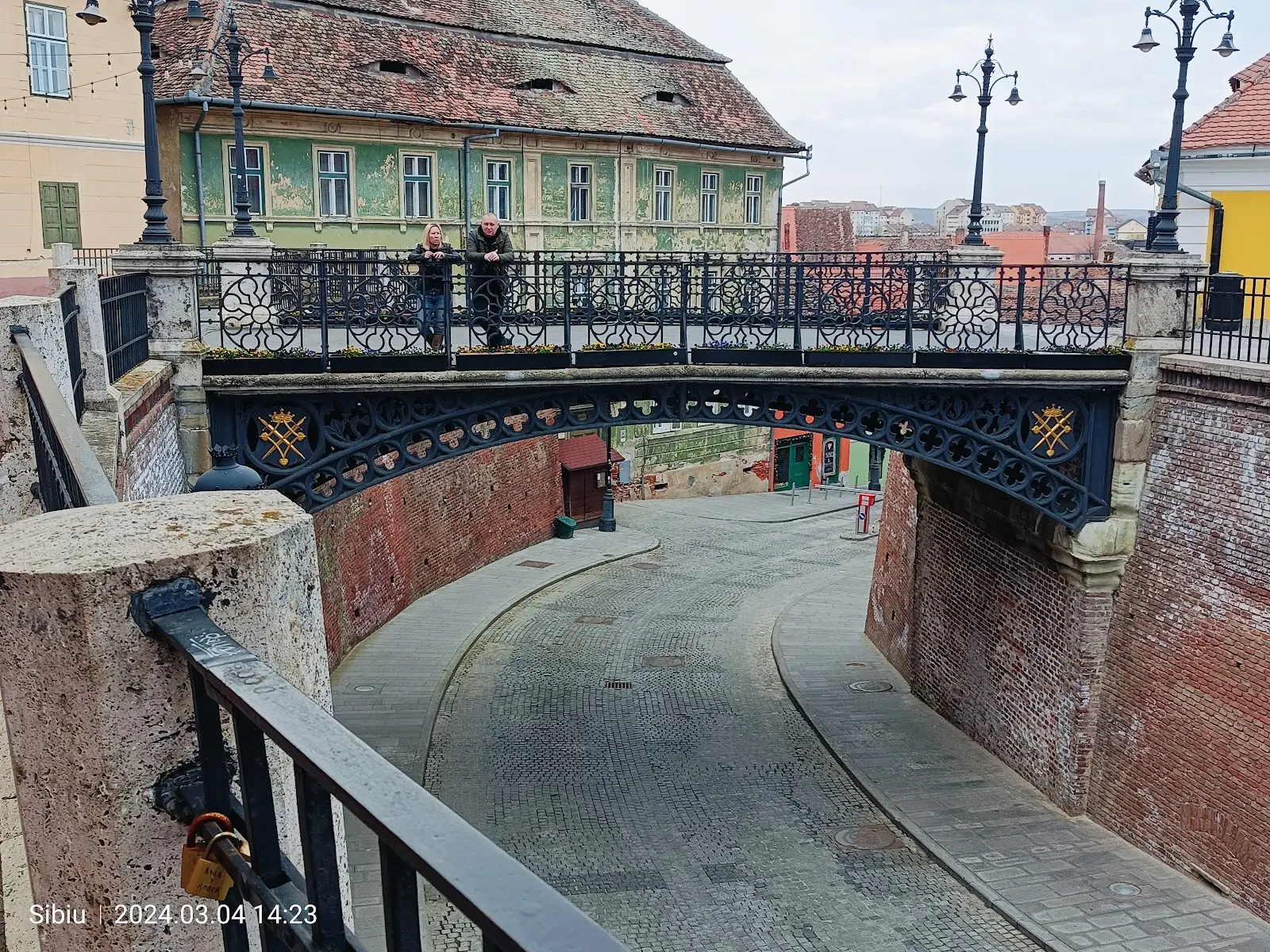
The Liars' Bridge in Sibiu, spanning a street in the lower town in the heart of the historic centre, is the first cast-iron bridge in Romania and one of the oldest of its kind in Europe, cast in the mid-19th century at the region's famous foundries. The small pedestrian bridge, with elegant railings and ironwork ornaments, links the Lesser Square to the ramp descending to the lower town and offers a picturesque view of the tiled roofs and the city's famous "house eyes." Its colourful name has given rise to entertaining legends about dishonest merchants and lovers with empty vows, told by guides with humour. It is a small but emblematic spot where every visitor pauses for a photograph. It stands in the centre of Sibiu, steps from the Great Square; visiting is free and possible at any time.
 Park
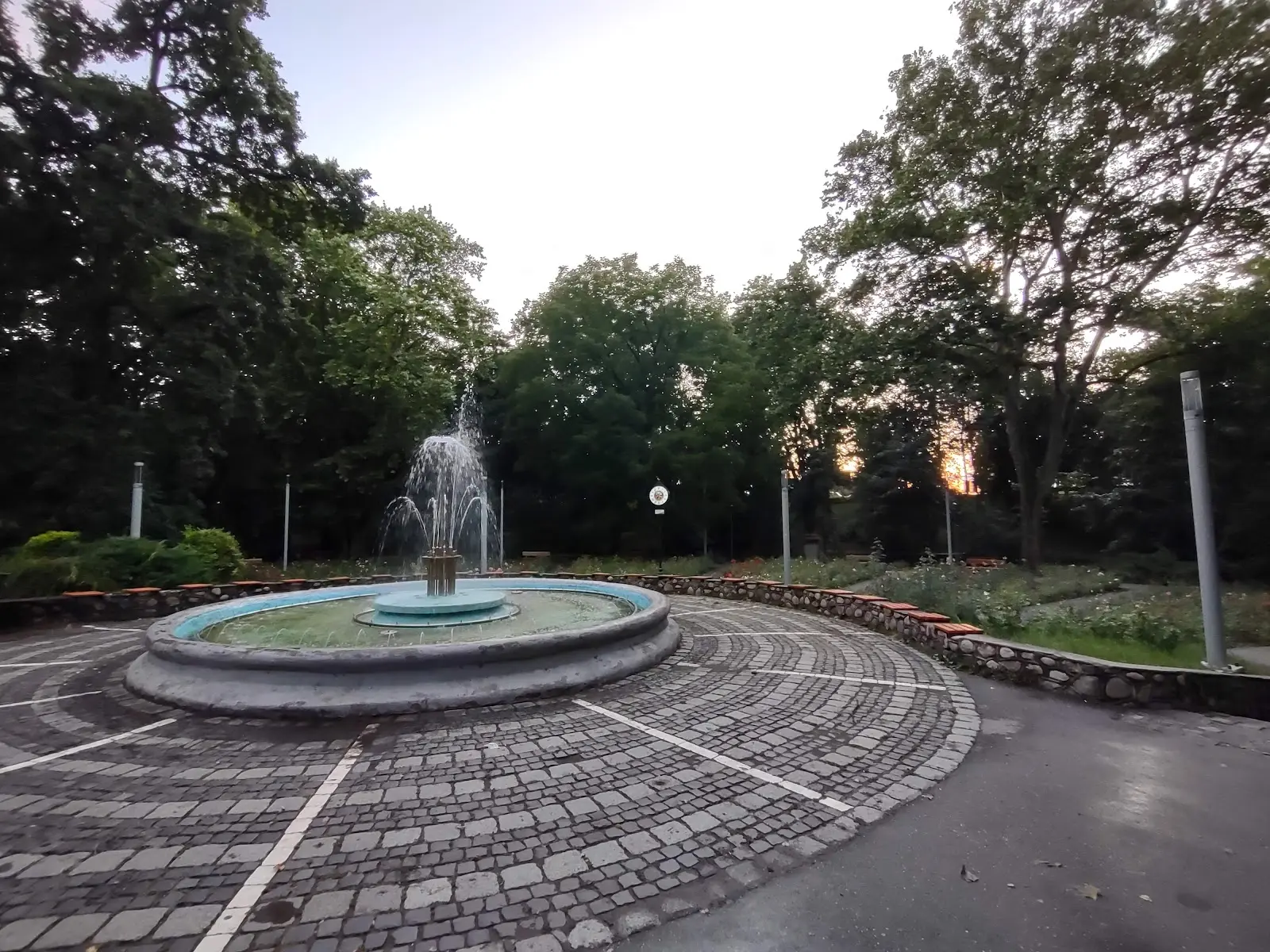
ParkParcul Sub Arini
Sub Arini Park is Sibiu oldest and best-loved park, laid out in the mid-19th century along the Trinkbach stream and extended over time into a true urban forest. With century-old alders, plane trees, oaks and many rare tree species, long shaded paths and little bridges over the water, the park is a place for walking, sport and relaxation for locals in every season. It is renowned for its calm atmosphere and for the spectacular autumn colours that make it a favourite of photographers. Along the paths stand busts of great figures and a flower clock, while its closeness to the historic centre makes it easy to reach on foot. It is the perfect spot for a green break between visits to the city museums and squares. A full stroll takes under an hour, but is best enjoyed unhurried, especially in the morning or towards evening.
 Landmark
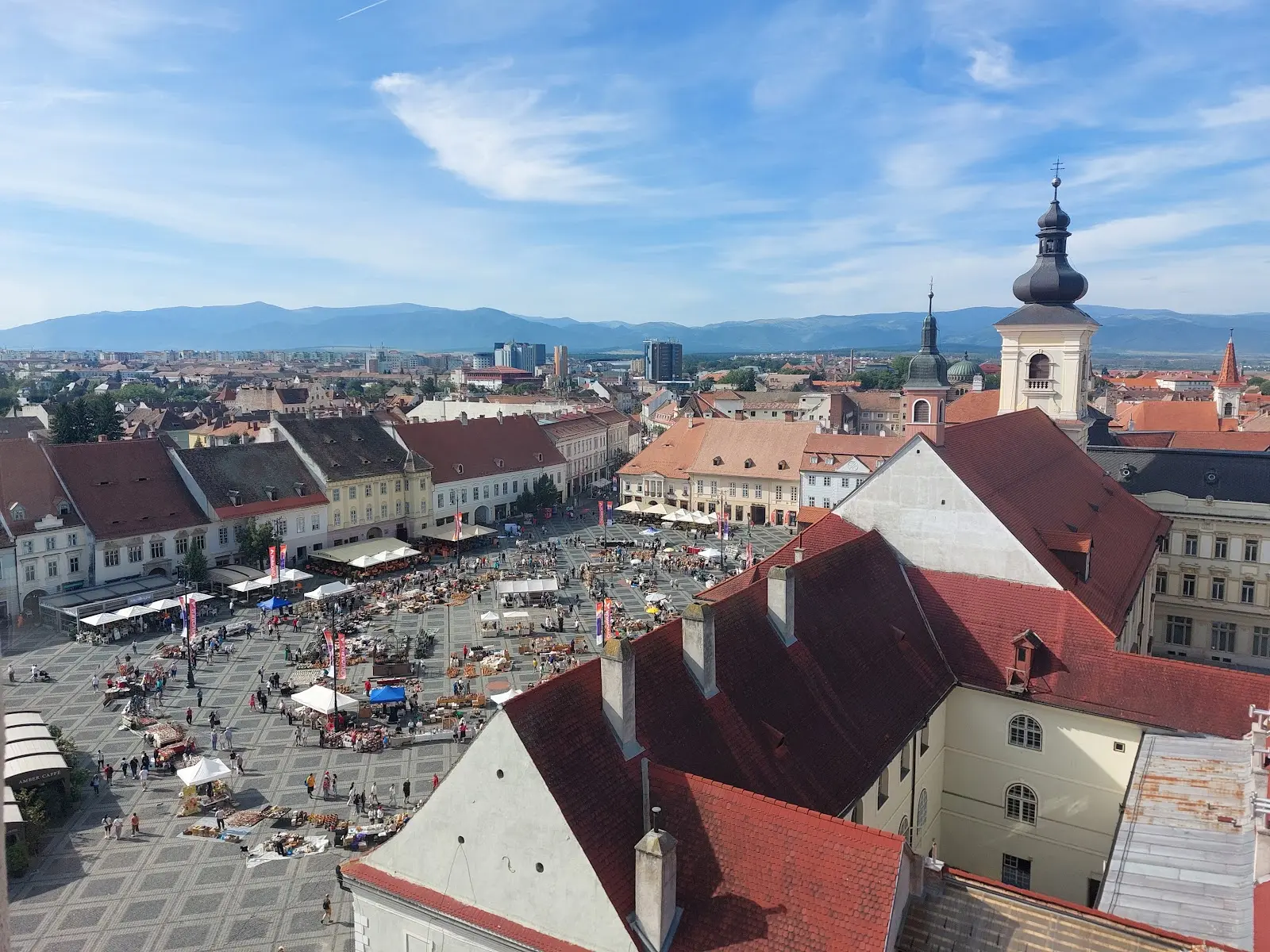
Turnul Sfatului
The Council Tower is one of the most important symbols of Sibiu, a medieval tower linking the Large Square to the Small Square, situated right in the heart of the old town. Originally built as an access gate and defensive tower in the fortification system, it was rebuilt and raised over the centuries, taking its present appearance with stacked storeys and a pointed roof. Its name comes from the adjoining building where the town council met, and the tower served as a lookout point for guards and for signalling fires. Today, climbing the interior stairs to the upper level, visitors are rewarded with a superb panorama over the squares, the roofs with their eye-like dormers and the towers of Sibiu, as far as the Fagaras Mountains. The tower is an excellent orientation point in the city. Practical note: check the visiting schedule for access to the upper platform; the climb involves narrow stairs, and the view is worth the effort.
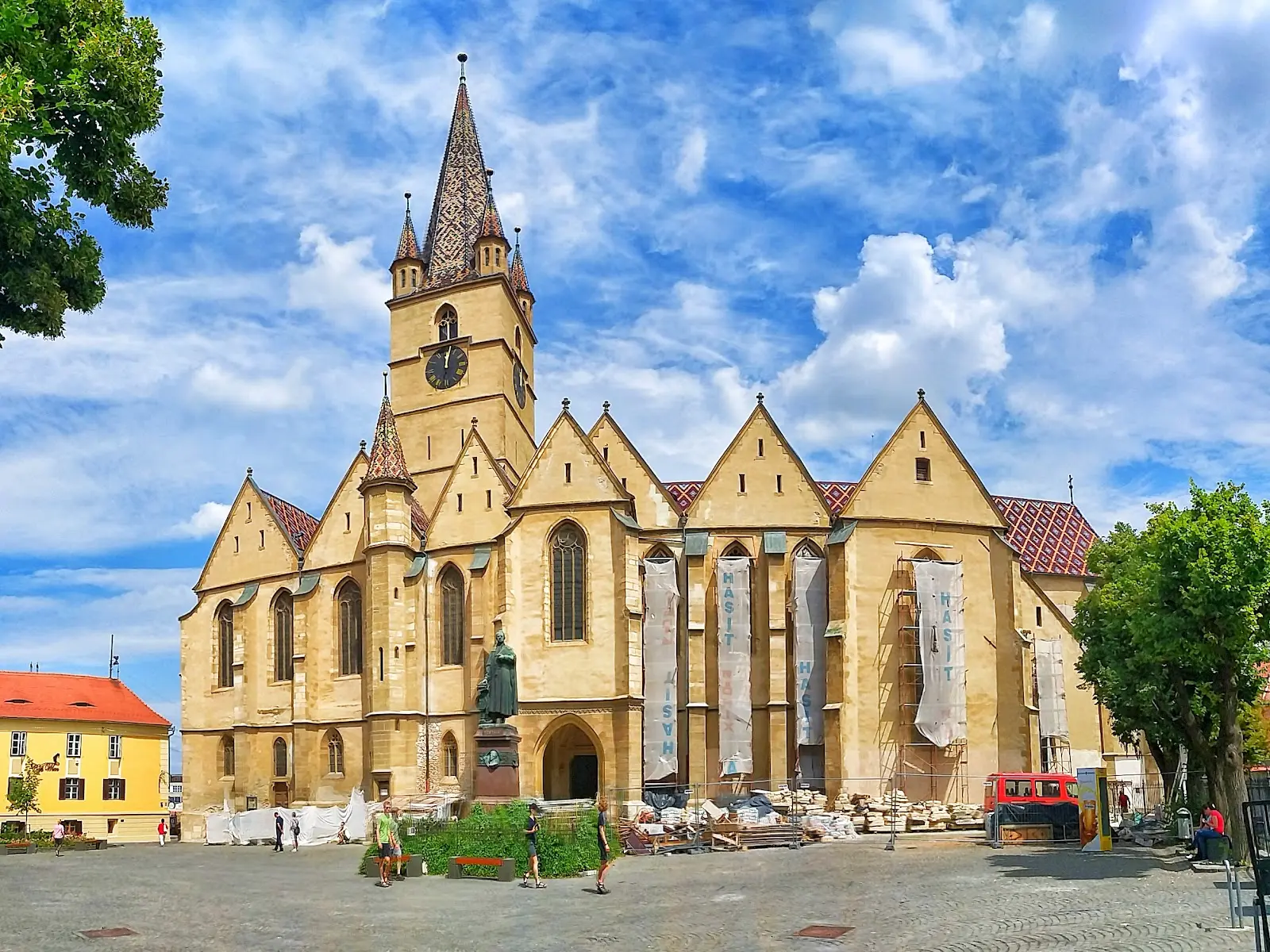 Church
Biserica Evanghelică din Sibiu
The Evangelical Church of Sibiu, also known as the Evangelical parish church, dominates the entire old town with its massive tower and is one of the most important Gothic buildings in Transylvania. Raised by the Saxon community between the fourteenth and fifteenth centuries on the site of an older church, it is a hall church with high vaults and a tower more than seventy metres tall, the highest in the region, which can be climbed for a broad view. The interior preserves a monumental medieval fresco of the Crucifixion, a carved stone pulpit, a large historic organ, and many funeral slabs of Saxon patricians. In the churchyard lies the tomb of a son of a Wallachian ruler. The church remains a symbol of Saxon culture in Transylvania. Visitors can climb the tower and admire the Gothic details. It is best to respect the services and the organ concerts held here.
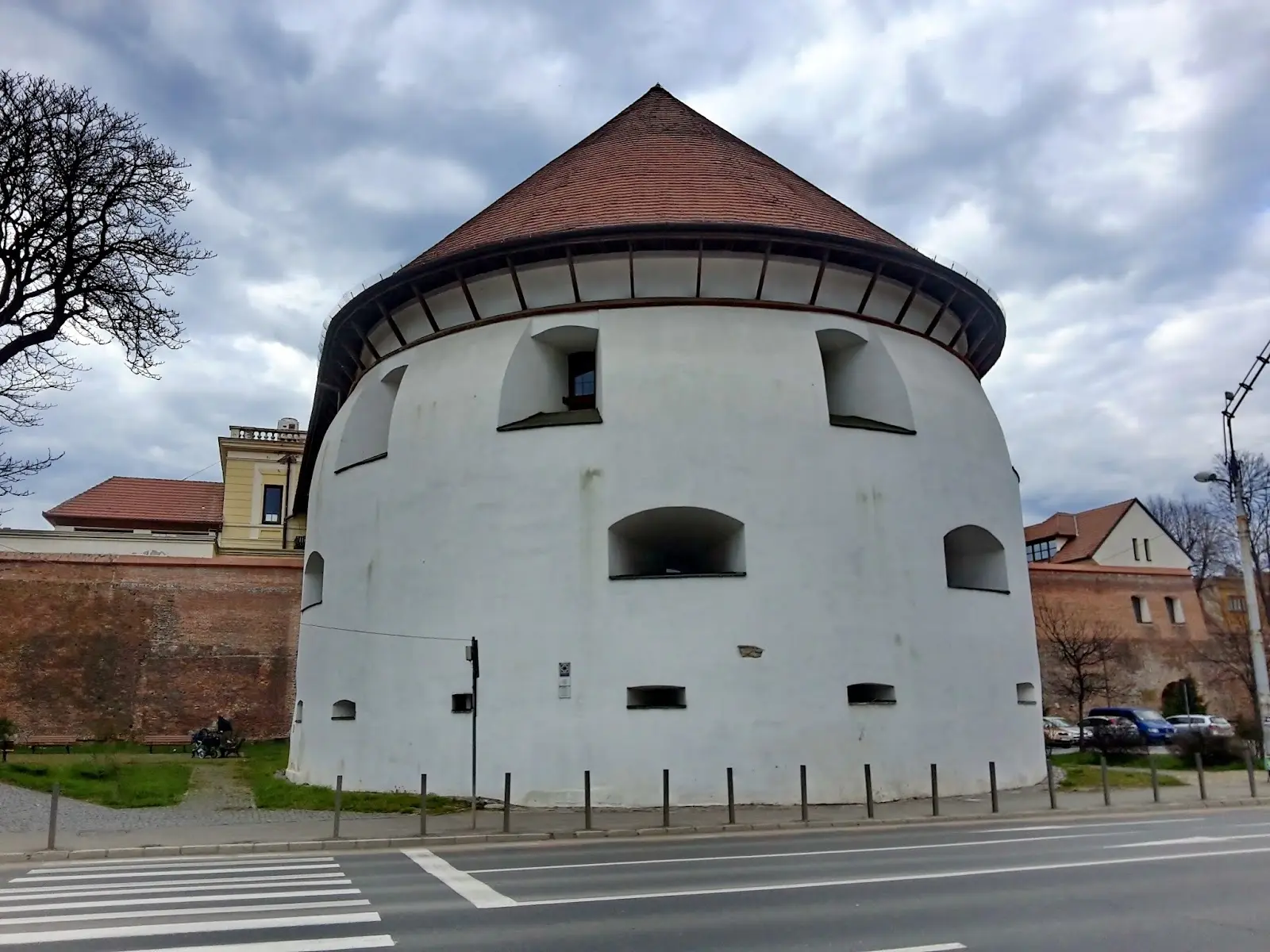 Landmark
Turnul Gros Sibiu (Sala Thalia)
The Thick Tower in Sibiu, raised in 1540 as part of the powerful defensive system of the Saxon citadel, is one of the most imposing artillery towers preserved from the town's belt of fortifications. With thick stone walls meant to withstand bombardment, the tower was conceived as an advanced defensive point on the southern side of the citadel. What makes it unique, however, is its second life: as early as 1788 a theatre was arranged inside it, considered the oldest in the Romanian lands, and today it houses the Thalia Hall, the concert hall of the Sibiu State Philharmonic. Thus a tower built for war became a temple of music, with prized acoustics, where symphonic concerts resound. The blend of medieval walls and living cultural life makes the Thick Tower a symbol of Sibiu. Practical note: consult the Philharmonic's programme to catch a concert in this unique historic setting.
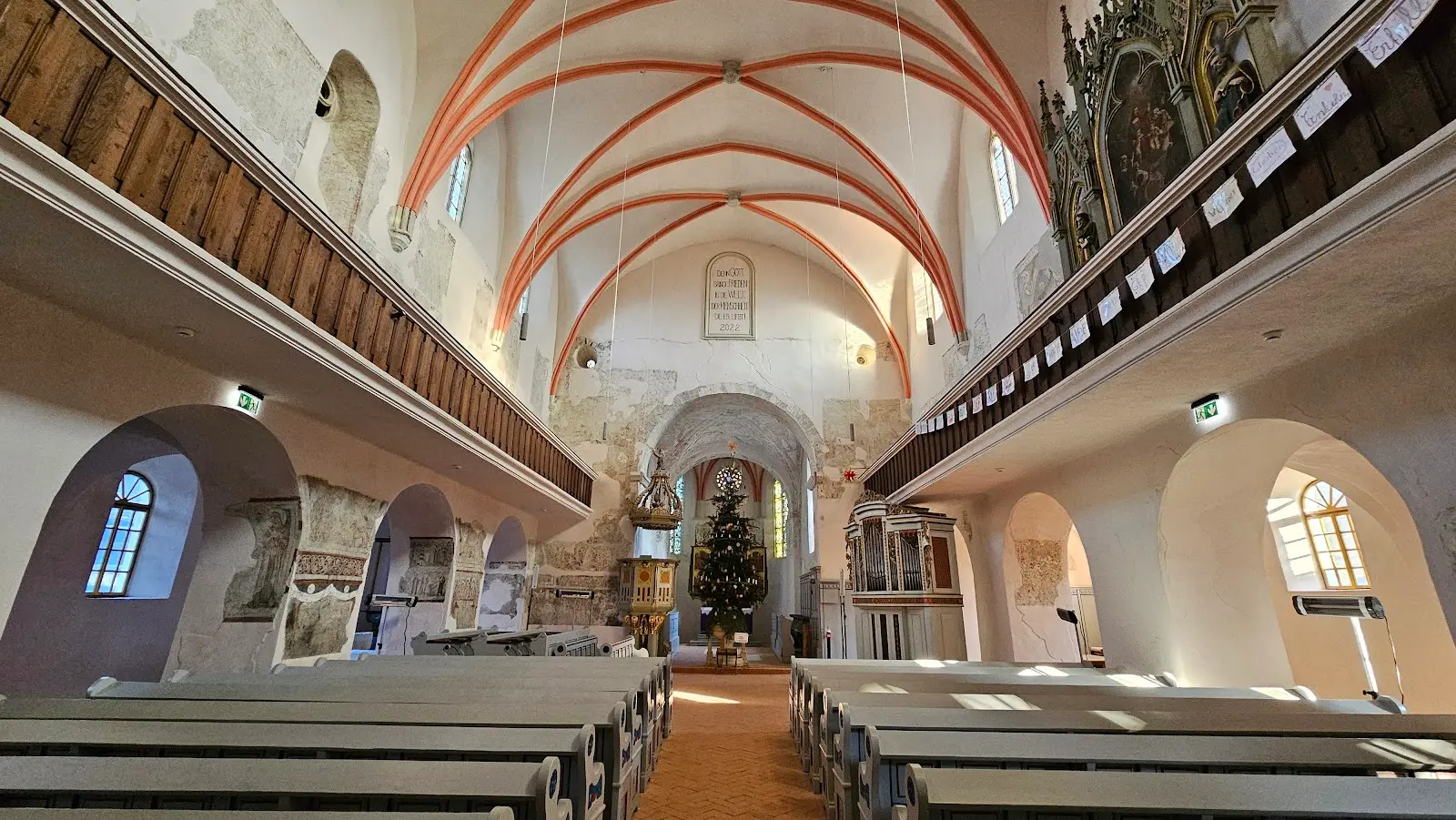 Church
Biserica Fortificată Cisnădie
The fortified church of Cisnadie, a Saxon village near Sibiu, is one of the most representative monuments of its kind in southern Transylvania, raised by the Saxon community from the medieval period onward. The edifice, with a Romanesque core later transformed in the Gothic style, is surrounded by defensive walls with towers and battlements, serving both as a place of worship and as a refuge against attack. The church tower, among the first in Transylvania fitted with a lightning rod and a clock, dominates the outline of the village. Within the fortified enclosure survive architectural elements and heritage objects that testify to the rich history of the community. Cisnadie was famous for its textile craft and its factories. The church is an important attraction on the circuit of the Saxon villages; checking the opening schedule of the tower and the enclosure is recommended.
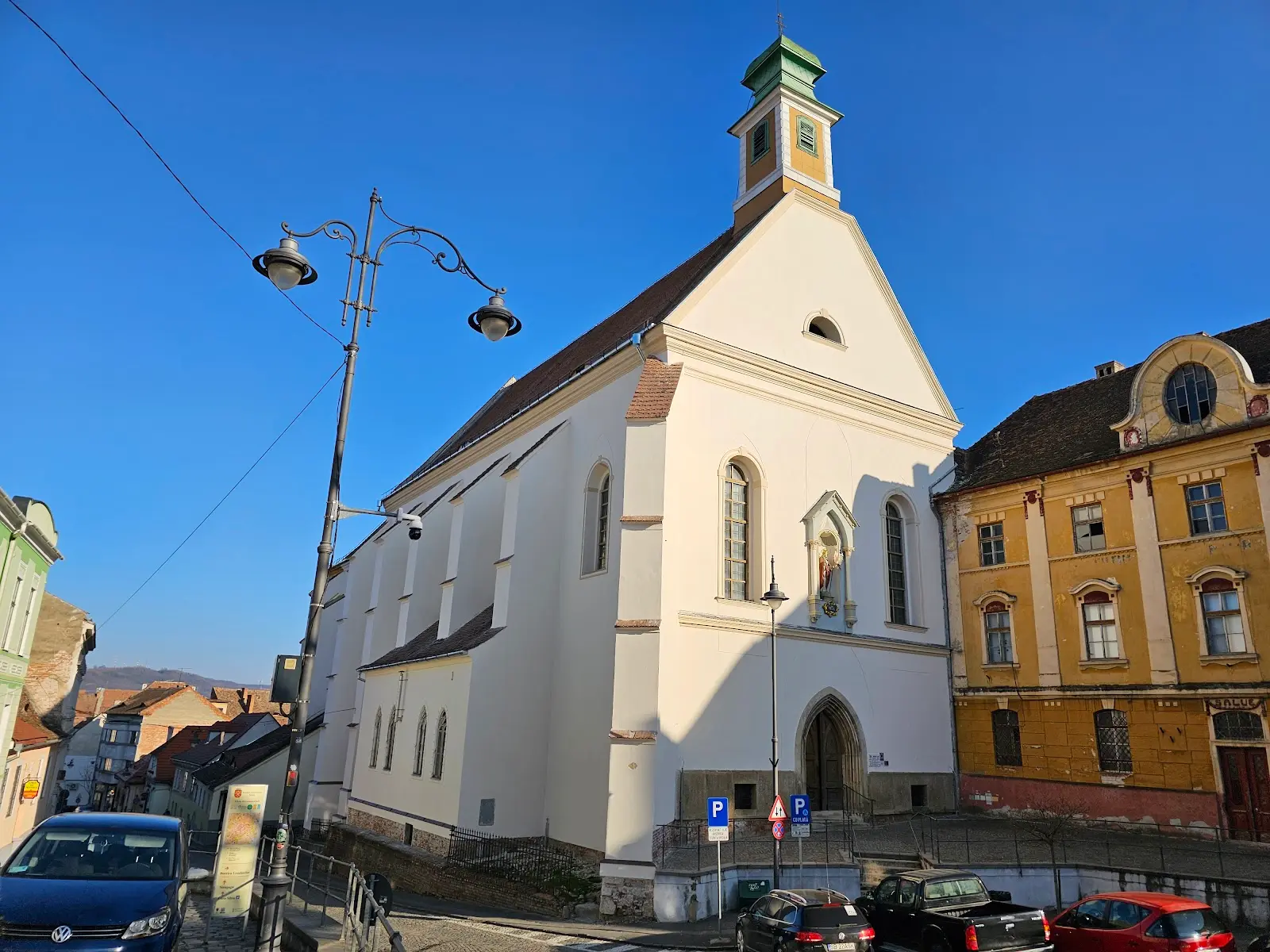 Church
Biserica Ursulinelor Sibiu
The Ursuline Church in Sibiu is a religious monument set in the historic centre of the city, linked to the work of the Ursuline order of nuns, who devoted themselves above all to the education of girls. The building has Gothic origins, deriving from an older monastery, but over time it underwent changes, gaining Baroque elements after the alterations made when it was taken over by the Ursulines. Alongside the church a monastic complex developed, with spaces devoted to teaching, which made the ensemble an important centre of education in old Sibiu. The interior preserves architectural and decorative elements that illustrate the blending of styles. Set near the other monuments of the Sibiu historic centre, the church can easily be included in a walking tour of the city, alongside the medieval squares, defensive towers and emblematic buildings. The site reflects the rich cultural and religious heritage of Sibiu, a city with a remarkable urban heritage recognised across Europe.
Frequently asked questions
What is Sibiu known for?+
Sibiu is best known for sights such as Muzeul ASTRA, Catedrala Sfânta Treime din Sibiu, Podul Minciunilor.
How many days do you need in Sibiu?+
One to two days is enough to see the highlights of Sibiu; stay longer to use it as a base for day trips.
Where should I stay in Sibiu?+
See our selected stays above, or check live rates and availability on the accommodation map.