
What to see in Zalău and Sălaj
The right route through Zalău and Sălaj: Porolissum, the Roman site on Dacia's northern limes, the History and Art Museum that explains it, the Botanical Garden and the wooden churches in the villages around.
The list of sights in Zalău is short, and the most important of them is not in the city. The right route starts at a Roman site on the nearby hills and comes back into town for context and a green break. Here is what it looks like, in the order that works best on the ground.
1. Porolissum, the edge of empire
Porolissum is the reason to come to Sălaj and one of the largest and best-preserved Roman sites in Romania. It was the most important military and customs centre on the northern limes of Roman Dacia: the point where roads, goods and people entered or left the empire.
Three main things are legible on the ground:
- The castrum, the military fort that controlled the area and the structure everything else was built around.
- The reconstructed gate, the rebuilt monumental entrance — the site's strongest image and the only place where you physically feel the height of Roman construction.
- The amphitheatre, proof that this was not merely a garrison but a settlement with spectacle, audiences and civilian life.
Over all of it runs the landscape: open hills, long views in every direction, wind. The choice of site was strategic, and three minutes of looking around is enough to understand why.
- Allow two to three hours and walk it properly, without cutting corners.
- Good shoes, water, sun protection — there is no shade.
- A car is effectively necessary; the site lies outside the city.
2. The History and Art Museum in Zalău
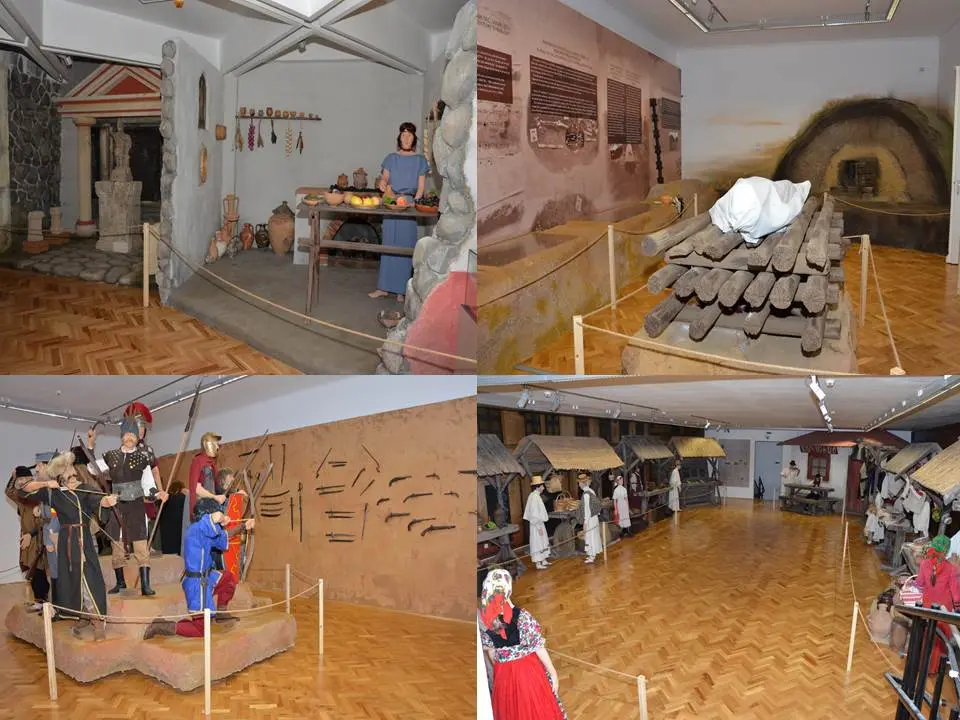
Back in town, the History and Art Museum is the site's obligatory companion. It holds pieces excavated at Porolissum — inscriptions, military equipment, objects of daily life from the imperial frontier — alongside Sălaj county's history and art collections.
If you can choose the order, visit the museum before the site: the stones on the hill say far more once you have seen what came out of them.
- Give it an hour or two, not twenty minutes.
- Head for the Roman section first if time is short.
- Ask on the spot what can currently be seen out at the site.
3. The Botanical Garden
The Botanical Garden is the most pleasant quiet stop in Zalău: plant collections, shaded paths and a slow walk that balances a morning spent on open ground at Porolissum.
It is not a sight you travel for, and it is only fair to say so. But on a day in Zalău, it is exactly the pause you need between the site and the drive home.
- Give it an hour; more is not necessary.
- It looks best in spring and in early autumn.
- It is also the best stop in town with children, after a morning of archaeology.
4. Zalău's centre, on foot
The city centre is covered on foot in a short walk: a few buildings of interest, the county institutions, public space and cafés. It is not a spectacular historic centre and there is no point presenting it as one.
Treat it as what it is: the place where you eat, have a coffee and sort out your schedule between two trips into the county.
- The full walk through the centre takes under an hour at a very easy pace.
- This is where you find the restaurants, cafés and shops you need before heading out into the county.
- It is a city that works well for daily life rather than one that sells itself to visitors — and you feel that, for better and for worse.
5. The Sălaj countryside: wooden churches and hills
The most underrated part of the region begins at the edge of town. Sălaj county has remarkable wooden churches, scattered through its villages, part of the timber architecture heritage of north-western Romania — tall towers, old wood, small graveyards, almost no tourists.
- Make a half-day driving circuit through the villages.
- Check access beforehand: many are opened by someone local rather than on fixed hours.
- Go quietly. These are fragile monuments and, in many cases, churches still in use.
Practical advice for a day in Sălaj
The area is not difficult, but it is not blanketed in tourist infrastructure either, so planning makes all the difference.
- The car is the key. Porolissum, the villages and the wooden churches are not reasonably reachable by public transport.
- Start in the morning. On open ground, the good light and the good temperature both come early.
- Bring food and water for the trips out of town; around the site and through the villages there are no services to rely on.
- Check the museum's opening hours in advance, especially at the start of the week.
- Do not compress everything into half a day. Porolissum deserves to be walked slowly rather than squeezed between two stops.
- Phone signal and navigation can be patchy on the roads between villages; save your route offline.
How to split your time
- One day — Porolissum in the morning, the museum in the afternoon, the Botanical Garden to finish. The reverse order (museum, then site) works even better for understanding.
- Two days — add a village circuit for the wooden churches and the Sălaj hills.
- Half a day — Porolissum only. If something has to go, cut the city, not the site.
Be realistic about Zalău
Zalău itself is a small city without much tourist density — and an artificially inflated list would help nobody. You do not come for the city. You come for Porolissum and the surroundings, and the city is the good base from which you reach them, with the museum that explains them and a botanical garden to end in.
With the right expectations, it is one of the best day trips in north-western Transylvania. For the full context — access, where to stay, the best seasons, the Sălaj countryside — read our complete guide to Zalău.
Plan your trip
Stays nearby
Stays in Romania
Experiences
Tours & activities
Guided tours, day trips and hand-picked experiences via GetYourGuide — free cancellation on most.
See all experiencesGetting to Romania
Flights, transfer & car
Fly into Romania
Compare fares to Bucharest Otopeni (OTP) and regional airports — Cluj, Sibiu, Iași, Timișoara.
Airport transfer
Private, fixed-price door-to-door transfer — driver waiting from the moment you land.
Rent a car — see the real Romania
A rental car is the key to Romania: the Transfăgărășan, the painted monasteries of Bucovina, mountain roads and the villages of Maramureș that no train reaches.
Find a car











